Pool Deck Leveling in Colorado Springs, CO
Lift uneven pool deck slabs back to grade without demolition or replacement. Our specialists use polyurethane foam injection to restore structurally sound pool decks across Colorado Springs and nearby communities.
Free Estimate · Honest Recommendations · Locally Owned
Free 44-Page Homeowner Guide
Get the Free 44-Page Homeowner Guide
Understand common causes of sinking concrete, repair versus replacement, contractor questions, and Colorado Springs–specific concrete concerns.
We're here to help
Questions? We're Here to Help.
Not every concrete problem requires an on-site visit.
Many questions can be answered with a quick phone call, helping you understand your options before scheduling an evaluation. Sometimes a quick conversation is all it takes to point you in the right direction.
If an on-site visit is needed, we'll help arrange it.
No pressure. No obligation. Just honest answers and the right solution for your property.
Whether you need answers, have questions, or are ready for an estimate, we're here to help. Give us a call or send us a quick message — we'd be happy to assist.
Overview
A settled pool deck doesn't have to mean a complete rebuild.
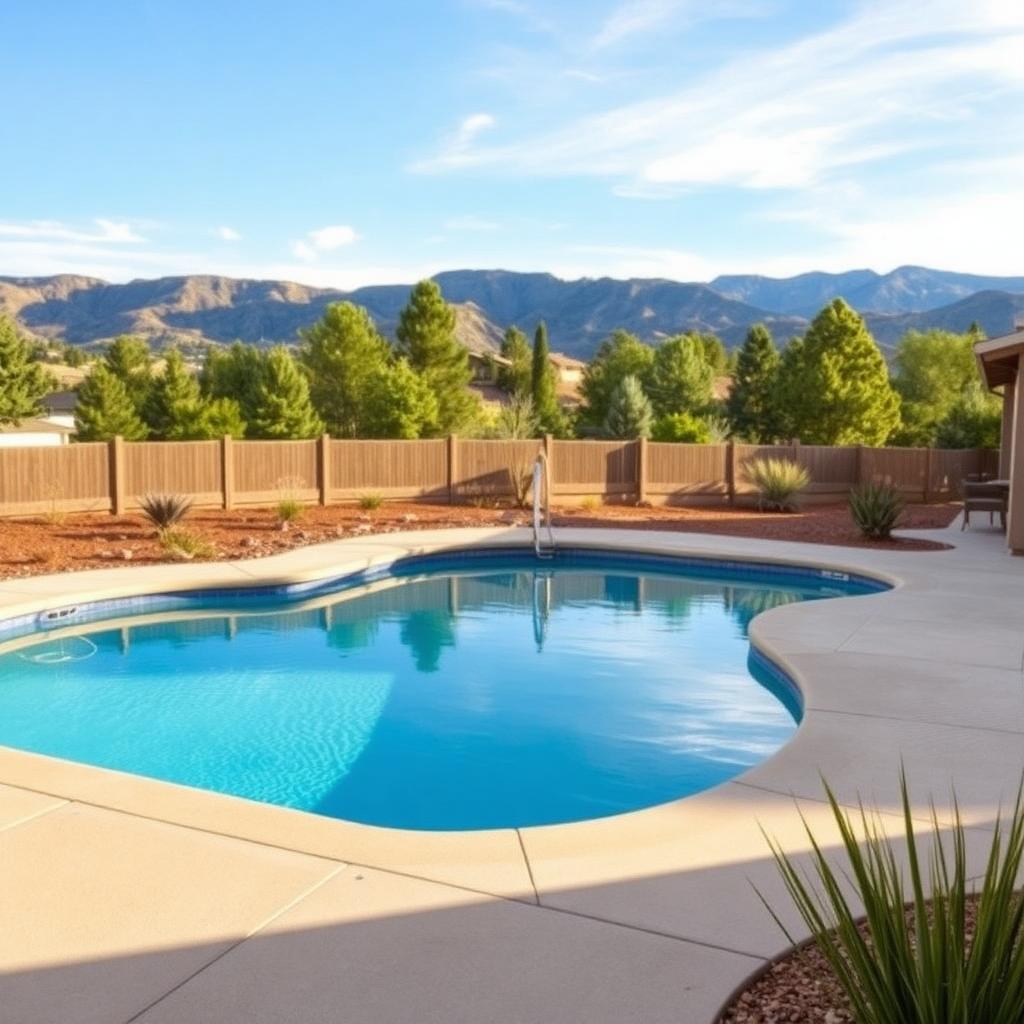
Pool decks take more abuse than most homeowners realize. Between constant splashing, wet feet, sprinkler overspray, and full exposure to Colorado Springs's hot summers and freezing winters, the concrete around a pool is always interacting with water and weather. Over time, the soil beneath the deck can settle, erode, or shift — and the concrete above it follows.
When that happens, many homeowners assume the only option is to tear out the old deck and pour a new one. In many cases, however, the concrete itself is still in good structural condition. What has changed is the support system underneath it. Once the voids are filled and the base is stabilized, the existing pool deck can often be lifted back into a level, usable position.
That's the idea behind pool deck leveling. Using polyurethane foam injected through small, discreet ports, a specialist can raise sunken sections, restore drainage, and remove trip hazards without the cost, mess, and downtime of a full replacement. For many Colorado Springs homeowners, it's a practical way to reclaim a pool area that has slowly become uneven. The sections below explain why pool decks sink, how to recognize the warning signs, and how to decide whether leveling is the right choice for your property.
Why pool decks settle
Settlement almost always starts beneath the slab.
A pool deck is only as stable as the soil supporting it. Here are the most common reasons that support breaks down in the Colorado Springs area.
Soil settlement
Pool decks are often poured on backfill soils that continue to compact for years after a home is built. As those soils densify, the deck loses uniform support and begins to settle unevenly around the pool perimeter.
Water infiltration
Rain, melting snow, and routine splashing send water into joints and cracks. Once water moves beneath the deck, it can erode fine soils and create voids that allow sections of concrete to drop.
Splash-out and irrigation
Pools constantly splash water onto the surrounding deck, and automatic sprinklers often overspray the area. Repeated wet-dry cycles near the pool edge gradually wash soil out from beneath the slab.
Freeze-thaw cycles
Colorado Springs winters bring repeated freeze-thaw cycles. Water that seeps under the pool deck expands when it freezes and contracts when it thaws, gradually shifting the slab and opening voids in the base.
Construction fill
Many pool decks in newer Colorado Springs homes were built over engineered fill. If that fill was not compacted in thin, uniform lifts, it settles unevenly and takes the concrete above it along for the ride.
Drainage issues
When a deck slopes toward the house, fence, or low corner instead of away from the pool, water repeatedly saturates the same sections of soil. Saturated soils compress more easily under the weight of the concrete and poolside furniture.
Want to go deeper on local soil and climate factors? Read our Learning Center article on why concrete sinks in Colorado Springs.
Request a free evaluationSigns your pool deck needs leveling
How to tell if your pool deck is a candidate.
You don't have to guess. These are the most common warning signs we see on Colorado Springs pool decks during free inspections.
- ✓
Uneven walking surfaces
If the deck no longer feels flat underfoot, or if furniture rocks on the concrete, the slab has likely settled out of plane in one or more areas.
- ✓
Trip hazards
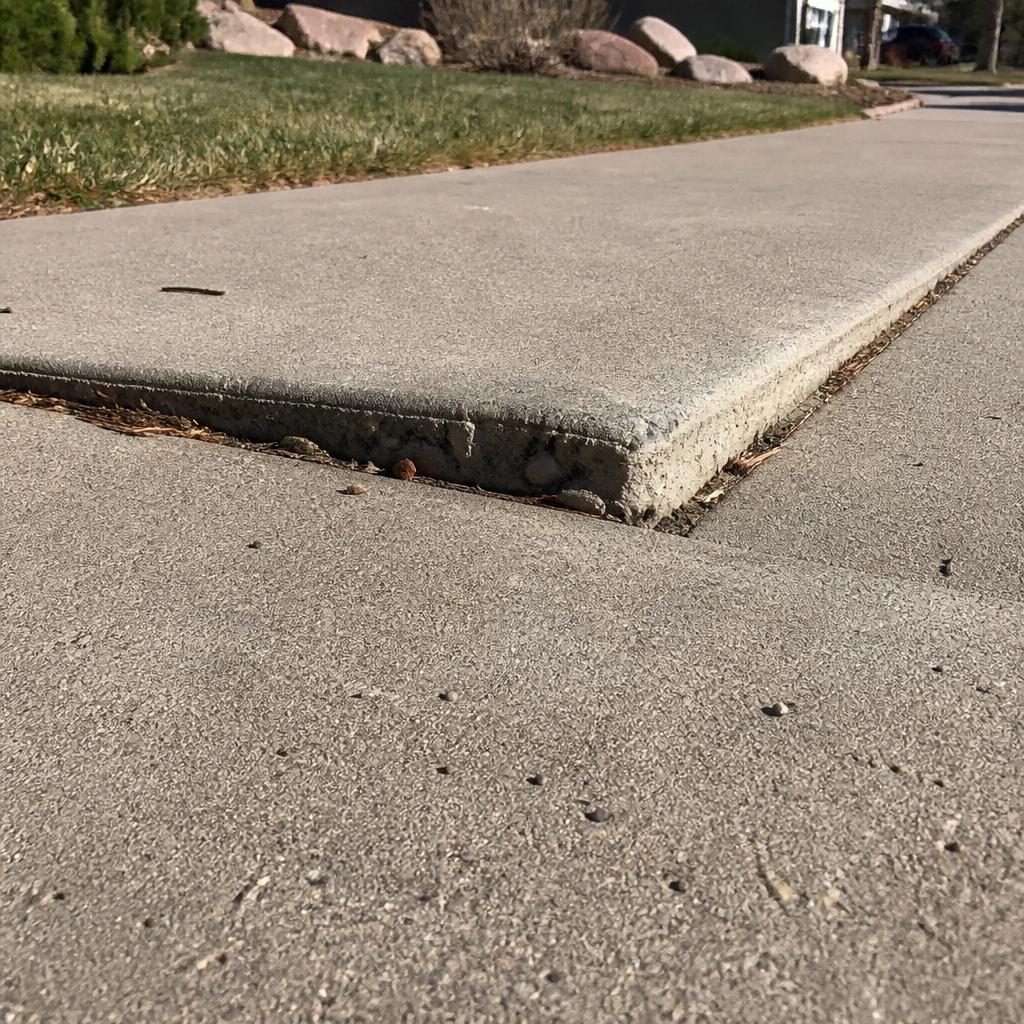
Vertical offsets between deck sections create lips that can catch feet, pool toys, and cleaning equipment — especially risky when the surface is wet.
- ✓
Water pooling
Puddles that remain long after rain or pool use indicate low spots where the deck has settled and is no longer draining as designed.
- ✓
Gaps between slabs
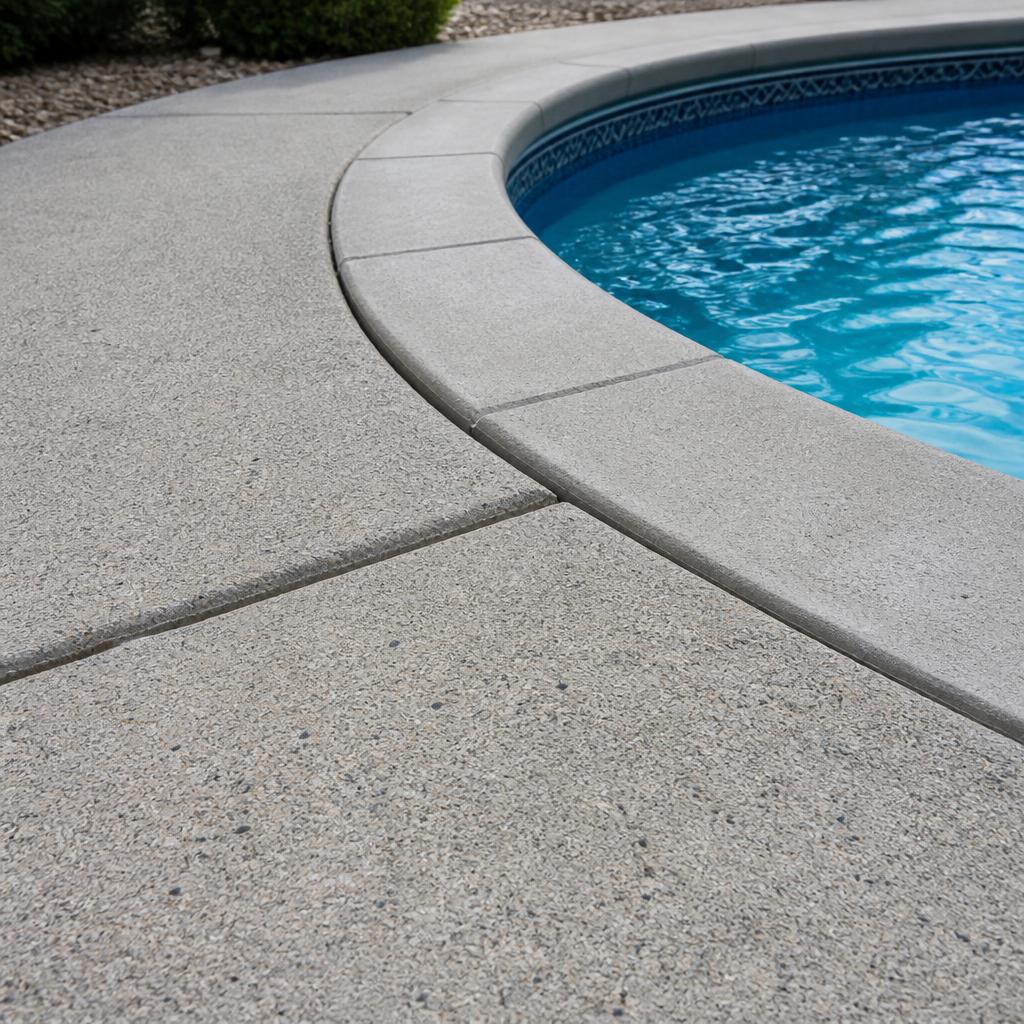
Widening joints or visible gaps between the pool deck and coping often mean the concrete has moved independently from the pool shell.
- ✓
Settlement cracks
Diagonal cracks, cracks that widen at one end, or cracks that follow a sunken area often signal the concrete has lost support from below.
- ✓
Deck sections sloping toward the pool
When the deck tilts toward the pool instead of away from it, water and debris are directed back into the water, and the underlying soil may be washing out.
Not Sure What You're Looking At?
Send us a photo or schedule a free on-site inspection — we'll give you a straight answer.
Safety around pool decks
Why uneven concrete around pools deserves attention.
Pool decks are used wet, barefoot, and often by children and guests. Small changes in surface height can create real safety concerns.
Slip hazards
Uneven decks create puddles, and puddles make smooth concrete slippery. Restoring proper slope helps water drain off the deck instead of collecting where people walk.
Trip hazards
Vertical offsets between settled sections are easy to miss when carrying towels, drinks, or pool equipment. Even small lips can catch a bare foot or flip-flop.
Barefoot safety
Pool decks are used barefoot more than almost any other concrete surface at home. A level, well-drained surface is simply more comfortable and predictable to walk on.
Children
Kids run, chase, and jump around pools without watching the ground. Removing raised edges and sunken panels reduces the chances of a stumble near the water.
Guests
Visitors are unfamiliar with your deck's quirks. Trip hazards that you have learned to step over can surprise guests, especially in the evening or when the deck is crowded.
For more on identifying problem concrete around your property, read signs your concrete needs leveling in our Learning Center.
How pool deck leveling works
Polyurethane foam lifting, explained step by step.
The process is designed to be minimally invasive and easy to understand. Here's what happens from arrival to walkthrough.
- 01
Inspection
A specialist walks the pool deck with you, measures the settlement, checks for voids, evaluates drainage, and determines whether the concrete is a good candidate for leveling.
- 02
Small drilled holes
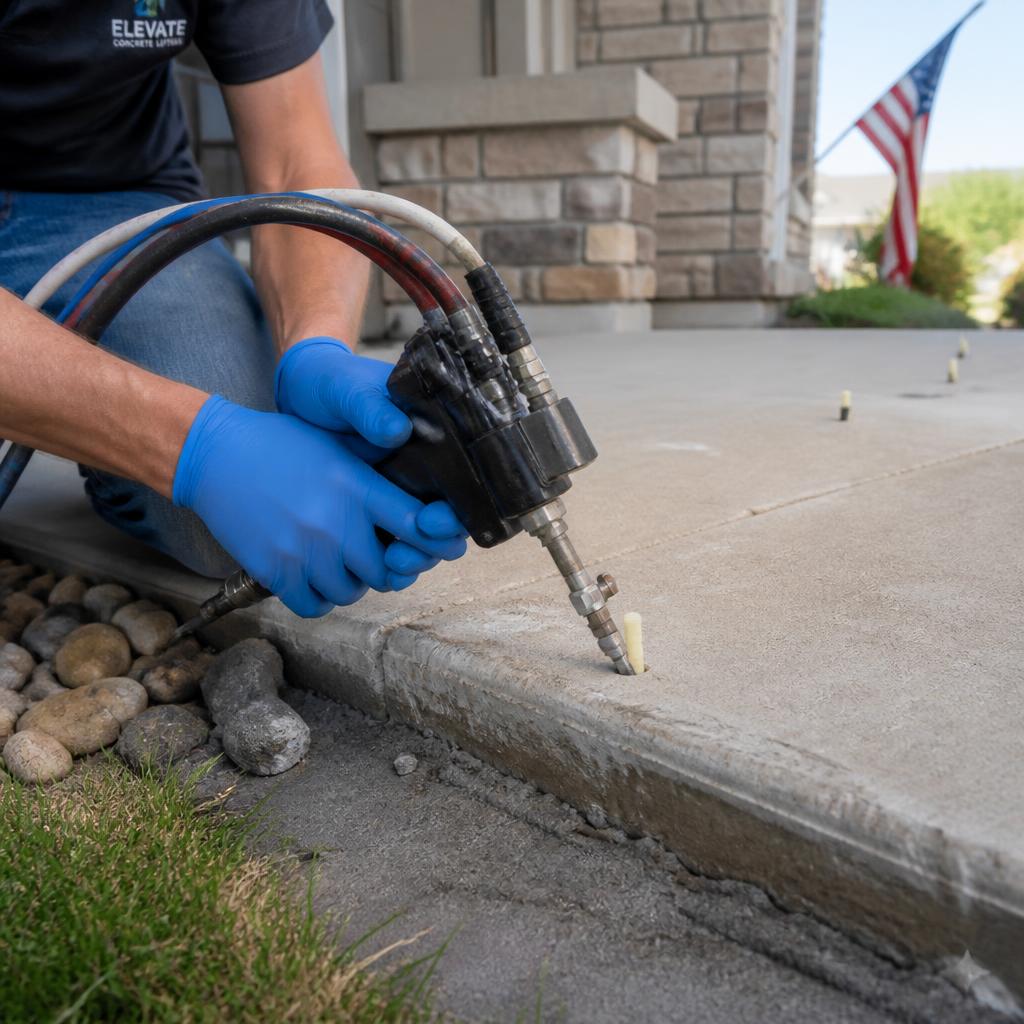
Discreet, dime-sized injection ports are drilled in planned locations so the lift is controlled and the repair blends into the existing surface.
- 03
Foam injection
A two-part polyurethane material is injected through the ports. It expands to fill voids, densify loose soils, and provide new support beneath the slab.
- 04
Controlled lifting
As the foam expands, the technician monitors the slab with levels and reference marks, adjusting placement to bring the deck back toward its original grade.
- 05
Hole patching
Once the lift is complete, the injection ports are cleaned and patched with a color-matched grout so they blend into the surrounding concrete.
- 06
Return to normal use
Polyurethane foam cures quickly. In most cases, the pool deck can be walked on soon after the work is finished — your specialist will confirm timing for your specific project.
Curious how foam compares to older methods? See polyurethane foam vs. mudjacking in our Learning Center for a side-by-side breakdown.
Pool deck leveling vs. replacement
When leveling may be a better fit — and when it isn't.
Both approaches have a place. A fair comparison helps you make the right call for your pool deck.
When leveling may be appropriate
- The pool deck is structurally sound and mostly intact
- Cracks are stable and not shifting under load
- Settlement is caused by voids or loose soil, not failing concrete
- The homeowner wants to preserve the existing surface, color, and layout
- The goal is to correct drainage, remove trip hazards, or restore appearance
When replacement may be recommended
- The concrete is severely crumbling, spalling, or breaking apart
- Multiple deep, active cracks run across the slab
- The deck has been repaired several times without lasting results
- The base is compromised in ways that lifting cannot address long-term
- The homeowner wants to change the size, shape, or material entirely
For a more detailed comparison including cost, longevity, and appearance, read our Learning Center guide on concrete leveling vs. concrete replacement.
Benefits of pool deck leveling
What homeowners gain from lifting instead of replacing.
Improved safety
Bringing settled sections back to grade removes trip hazards and reduces the risk of slips and falls around the pool.
Improved appearance
A level pool deck looks maintained and inviting. Leveling restores the original lines of the concrete without the color mismatch of replacement panels.
Improved drainage
Restoring proper slope helps water run off the deck instead of pooling against the pool, home, or fence.
Preserving existing concrete
Lifting the deck you already have keeps the original color, texture, and layout intact — no waiting for new concrete to cure or trying to match older work.
Less disruption than replacement
Most residential pool decks can be leveled in a few hours with minimal noise, no demolition, and no extended closure of your outdoor living space.
Restore outdoor living spaces
A level, well-drained deck is easier to furnish, walk on, and enjoy — helping you get back to using the pool area the way it was intended.
Frequently asked questions
Homeowner questions about pool deck leveling.
Short, straightforward answers to the questions we hear most often during Colorado Springs pool deck estimates.
- Can pool decks be leveled?
- Yes. Many structurally sound pool decks with settlement, minor cracks, or uneven joints can be lifted with polyurethane foam injection. During a free inspection, a specialist evaluates the concrete and the soil beneath it to determine whether leveling is the right approach.
- How long does pool deck leveling last?
- Polyurethane foam is a stable, water-resistant material designed for concrete lifting. When the underlying cause of settlement — such as poor drainage or splash-out repeatedly saturating the base — is also addressed, many homeowners see long-lasting results. Any pool deck can shift again if new voids form, so we look for the root cause during the estimate.
- Will cracks disappear?
- No. Leveling raises the slab and restores support beneath it, but it does not fill or cosmetically repair surface cracks. Existing cracks remain visible after the lift. Some homeowners choose to seal or fill cracks separately once the deck has been leveled.
- Can pool decks sink again?
- It's possible. Foam leveling addresses the current voids and supports the slab, but if a new leak develops, if drainage continues to funnel water under the deck, or if soil conditions change, additional settlement can occur. Correcting drainage issues alongside the repair helps protect the work.
- Does pool water contribute to settlement?
- Yes. Splash-out, overflowing pools, and routine wet-dry cycles can wash fine soils out from beneath the deck over time. Combined with sprinkler overspray and poor drainage, this is one of the more common contributors to pool deck settlement in the Colorado Springs area.
- How soon can the pool area be used?
- Polyurethane foam cures quickly compared to older slurry-based methods. Most pool decks can be returned to normal foot traffic soon after the work is completed, and your technician will confirm the exact timeline based on temperature, slab size, and site conditions.
- How much does pool deck leveling cost?
- Cost depends on the size of the deck, the amount of lift needed, and access to the work area. Leveling typically costs a fraction of what full replacement would cost. A written estimate provides real numbers rather than a national average — see our Learning Center article on concrete leveling cost in Colorado Springs for more context.
- Can expansion joints be repaired?
- Expansion joints are often evaluated during the inspection. While foam leveling restores the height and slope of the slab, damaged or missing joint material may need to be addressed separately to protect the repair and improve appearance.
- Is polyurethane better than mudjacking?
- Polyurethane foam uses smaller injection holes, weighs far less per cubic foot than a cement slurry, cures faster, and is not affected by water in the same way. For a deeper side-by-side comparison, see our Learning Center article on polyurethane foam vs. mudjacking.
- Does leveling help eliminate trip hazards?
- Yes. One of the main goals of pool deck leveling is to bring offset sections back into alignment so the walking surface is more uniform. This removes the raised edges that catch feet, pool toys, and cleaning equipment.
Additional homeowner guides: concrete leveling cost in Colorado Springs, how long concrete leveling lasts, whether cracked concrete can be leveled, signs your concrete needs leveling, and what to expect during a concrete leveling estimate.
Why Colorado Springs homeowners choose us
Straightforward service from a local team.
No exaggerated claims, no invented stats — just how we approach every pool deck estimate.
Free estimates
Every pool deck inspection is free. You'll receive a written estimate and a clear explanation of your options with no obligation to move forward.
Honest recommendations
If your pool deck is a better candidate for replacement, or if only part of it needs lifting, we'll tell you. We would rather earn a smaller job today than oversell one that won't hold up.
Modern repair methods
We focus on polyurethane foam injection, a lightweight and water-resistant material designed for concrete lifting rather than a repurposed slurry.
Educational approach
We walk you through what we're seeing on your pool deck, why it's happening, and what the proposed repair is designed to accomplish — in plain language.
Local Colorado Springs service
We live and work in the Colorado Springs area. That means we understand local soils, drainage challenges, and how our winters affect concrete over time.
Related concrete services
More ways we help Colorado Springs homeowners and businesses.
Service area
Pool deck leveling across Colorado Springs and nearby communities.
We serve Colorado Springs, Briargate, Monument, Airway Heights, Black Forest, Peyton, and the surrounding areas with same-week scheduling in most neighborhoods.
- Colorado Springs
- Briargate
- Monument
- Fountain
- Black Forest
- Peyton
- Woodmoor
- Falcon
Contact us
Have questions? Need an estimate? We're here to help.
A short, no-pressure inspection is often the difference between an expensive replacement and a same-day repair. Call, email, or request an estimate online — we'll take it from there.
Lift it — don't replace it.
Have questions about your concrete? Need advice? Want a free estimate? We're here to help. Concrete leveling saves the slab you already have, at a fraction of the cost of replacement.
- Often less costly and less disruptive than tear-out and replacement
- Repair before replacement when appropriate
- Modern concrete lifting methods
- Clear recommendations — no pressure, no upsells
Free Estimates · Colorado Springs-Focused Service · Clear Recommendations