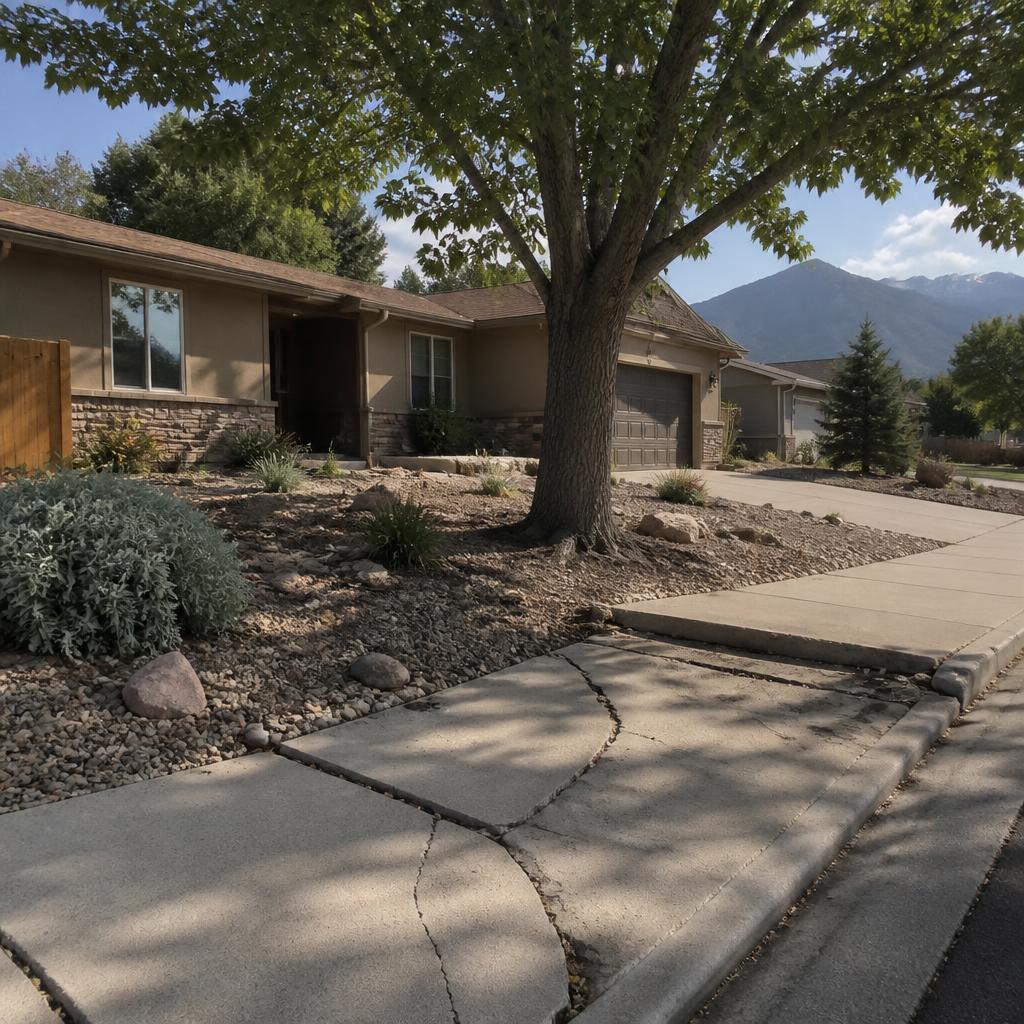
Tree roots can contribute to uneven concrete, but expansive clay soils, moisture changes, and freeze-thaw cycles usually play a much larger role along the Front Range. Here's how the two interact — and what Colorado Springs homeowners can do about it.
Many homeowners assume tree roots are the primary reason concrete sinks or becomes uneven. While roots can contribute to concrete movement, they are often only one part of the story.
In Colorado Springs, expansive clay soils, changing moisture levels, and freeze-thaw cycles usually play a much larger role. However, trees can influence these conditions by changing how moisture moves through the soil.
Understanding the relationship between tree roots and concrete can help homeowners make better decisions about protecting their property.
How Tree Roots Affect Concrete
Tree roots naturally grow toward sources of water and oxygen.
As roots mature, they can:
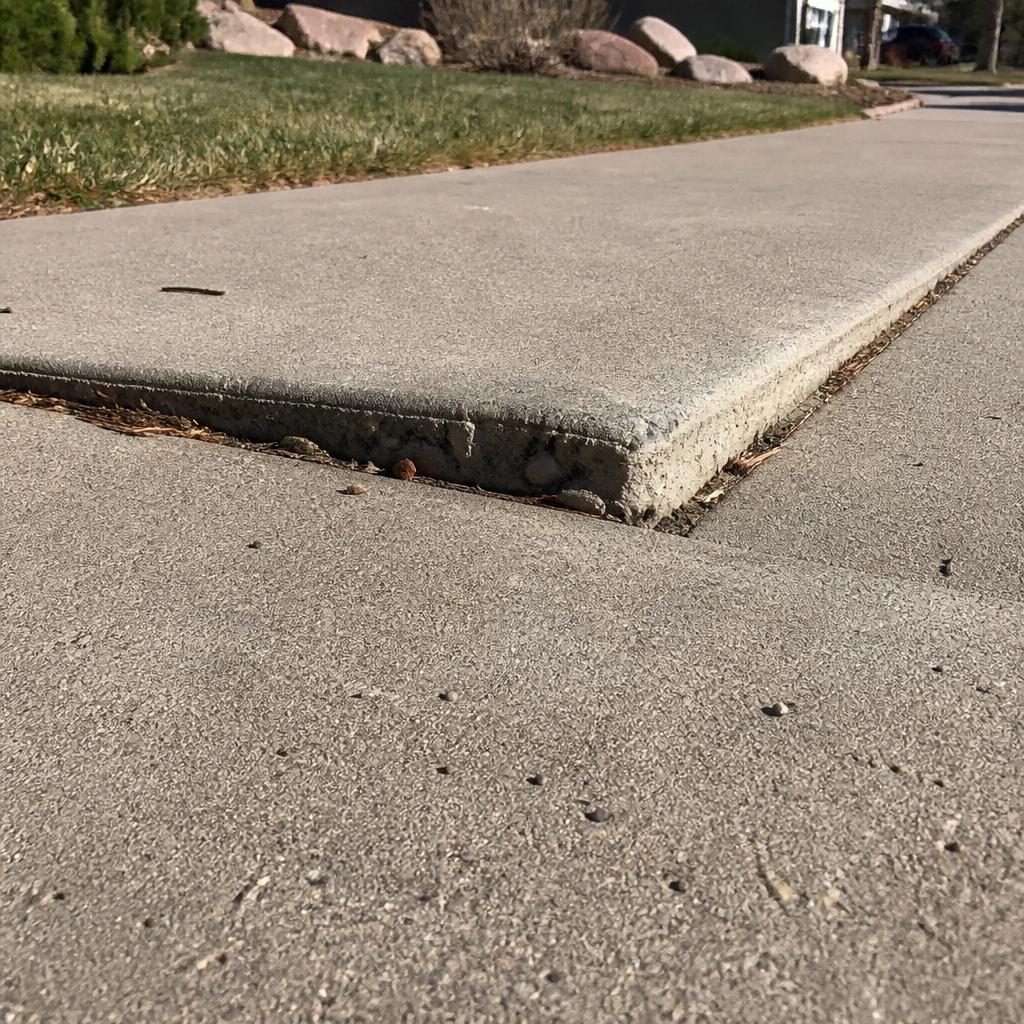
- Lift sections of sidewalks
- Push against patio slabs
- Create pressure beneath walkways
- Change soil moisture beneath nearby concrete
Most roots don't "break" concrete by themselves. Instead, they gradually create pressure or contribute to soil movement that eventually causes slabs to become uneven.
Why This Is Common in Colorado Springs
Colorado Springs presents unique conditions.
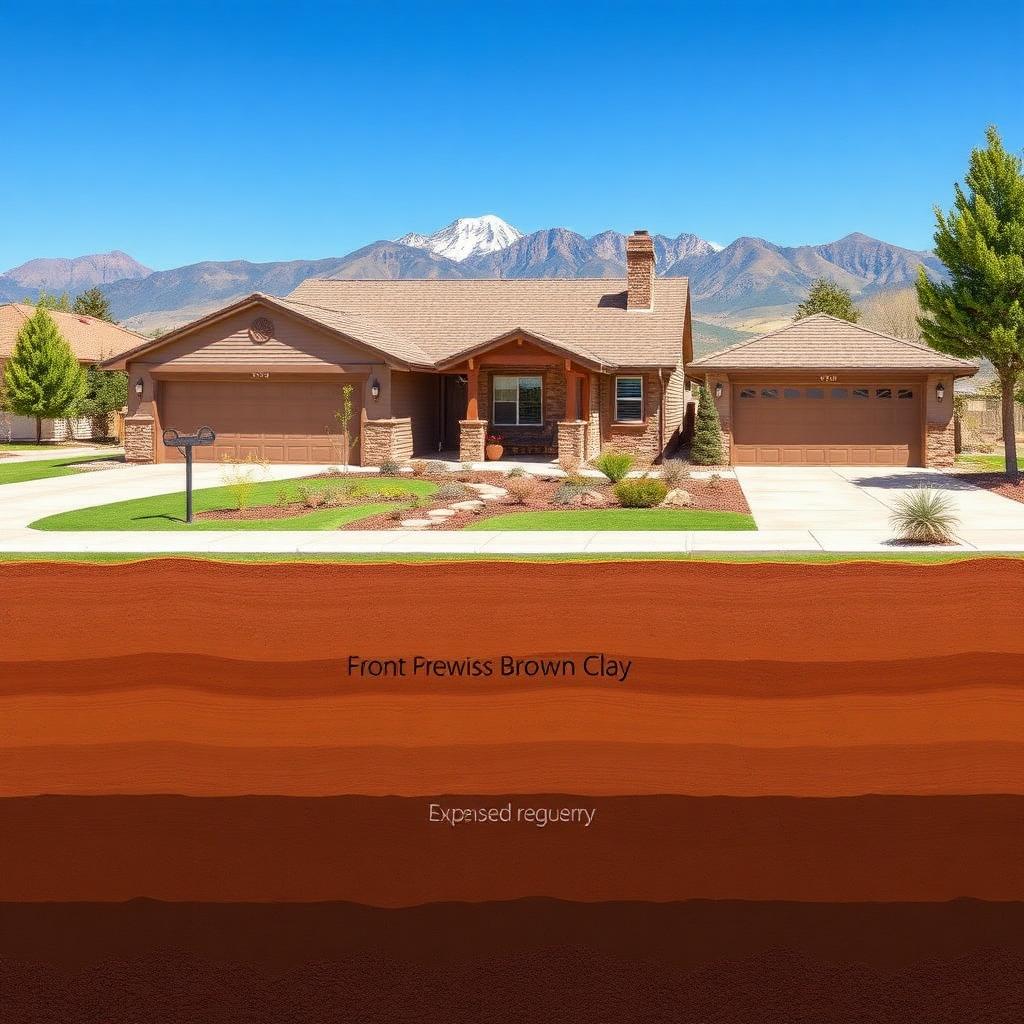
Large shade trees are common in established neighborhoods, while the region's expansive clay soils naturally expand and contract as moisture levels change.
Trees absorb significant amounts of water during the growing season.
When soil dries unevenly beneath a slab, portions of the concrete may lose support and begin to settle.
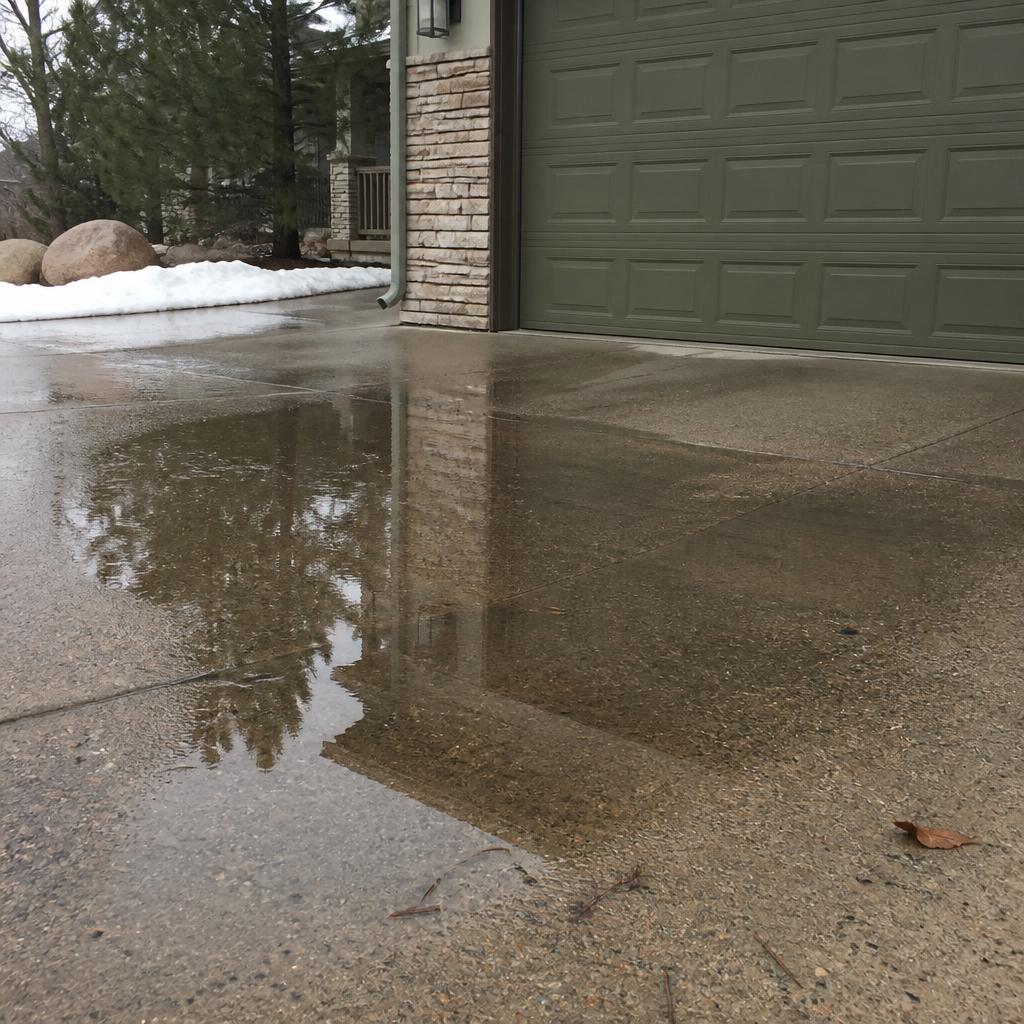
Combined with Colorado's freeze-thaw cycles and seasonal snowmelt, these changing soil conditions can accelerate settlement. Read more in why concrete sinks in Colorado Springs.
Signs Tree Roots May Be Contributing
Watch for:
- Sidewalks lifting near mature trees
- Driveways becoming uneven close to landscaped areas
- Patio slabs separating near tree lines
- Cracks developing adjacent to large roots
- Uneven concrete combined with exposed surface roots
These symptoms don't always mean roots are the only cause, but they are worth investigating.
Can You Remove the Roots?
Removing roots is not always the best solution.
Large structural roots help stabilize healthy trees.
Cutting major roots can:
- Damage or kill the tree
- Increase the risk of tree failure
- Create additional soil instability
Before removing roots, homeowners should consider consulting a qualified arborist if the tree's health may be affected.
Can Concrete Be Leveled if Tree Roots Are Present?
In many situations, yes.
If the concrete is structurally sound, polyurethane foam concrete leveling can often restore the slab to a safer, more level position.
However, the underlying cause of the movement should always be evaluated.
Addressing drainage, soil conditions, or future root growth may help improve long-term performance. This applies whether the affected area is a driveway, a sidewalk, or a patio.
Reducing Future Problems
Homeowners can help minimize future settlement by:
- Maintaining proper drainage
- Directing downspouts away from slabs
- Avoiding excessive irrigation near concrete
- Monitoring large trees located close to sidewalks and driveways
- Repairing minor settlement before it becomes more severe
Frequently Asked Questions
Do tree roots always cause uneven concrete?
No. In Colorado Springs, expansive clay soils and seasonal moisture changes are often more significant contributors than tree roots alone.
Should I remove a tree if my sidewalk is uneven?
Not necessarily. Many uneven sidewalks can be repaired without removing mature trees. An evaluation can help determine the underlying cause.
Can polyurethane concrete leveling work around tree roots?
Often, yes. Every project is different, but many settled slabs can be successfully leveled while preserving nearby landscaping.
Will the concrete become uneven again?
Proper drainage, healthy soil conditions, and routine maintenance can help reduce the likelihood of future movement.
Final Thoughts
Tree roots can influence concrete settlement, but they are rarely the only factor.
In Colorado Springs, expansive clay soils, changing moisture conditions, seasonal irrigation, and freeze-thaw cycles all work together to affect concrete performance.
Understanding these local conditions allows homeowners to make informed decisions and address small problems before they become costly repairs.
Schedule Your Free Estimate
If tree roots or settled soil may be affecting your concrete, a professional inspection can help identify the underlying cause and the most appropriate repair.
Call 719-521-2291 or request your free estimate online to discuss your project.