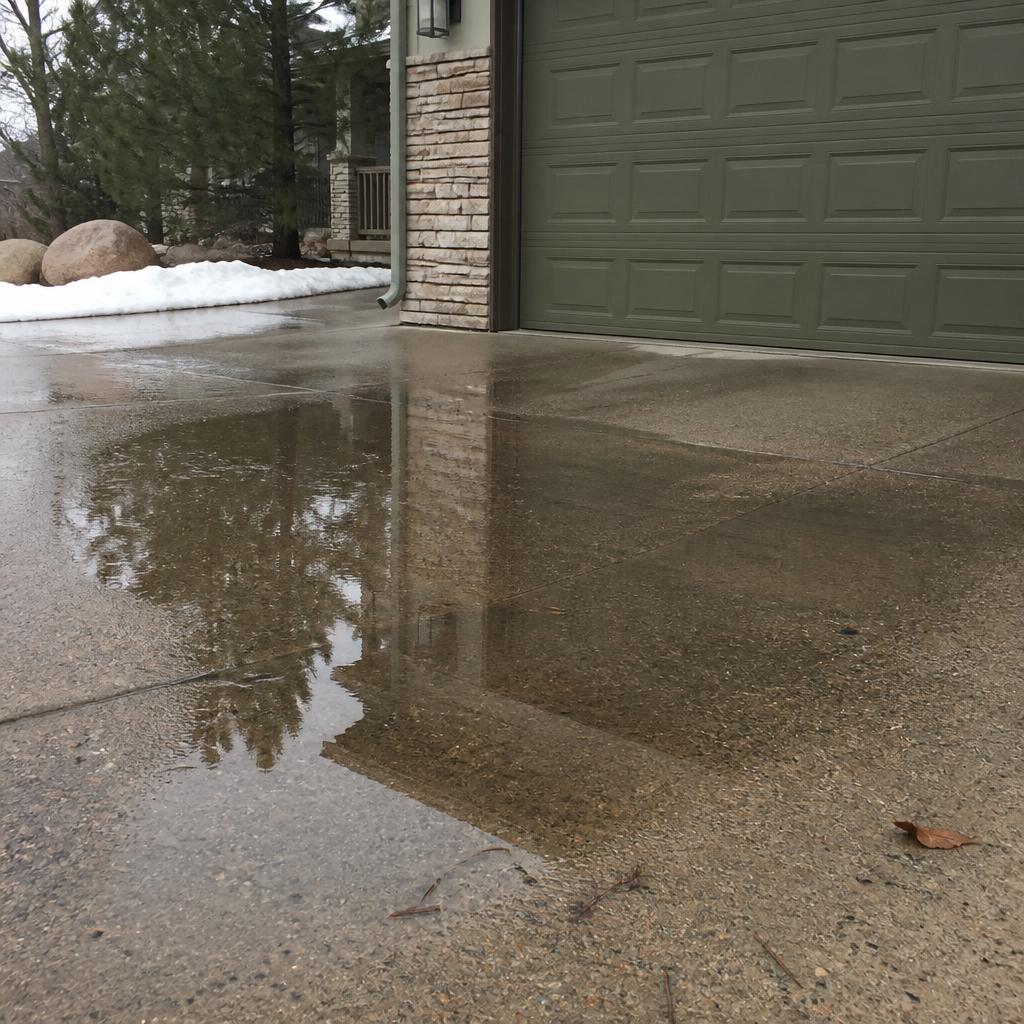
Not every crack in a Colorado Springs driveway or sidewalk means trouble — but some do. Learn which cracks are cosmetic, which point to settlement or expansive-clay movement, and when it's time to have a slab evaluated.
Finding a crack in your driveway, sidewalk, patio, or garage floor is unsettling — but not every crack is a problem.
Concrete is a rigid material sitting on ground that never stops moving, and small cracks are one of the ways it relieves stress. The question isn't whether your concrete will crack; almost every slab in Colorado Springs does eventually. The real question is which cracks are telling you something has changed underneath.
This guide walks through how to read the cracks in your concrete — what's normal for the Front Range climate and what usually points to settlement in the soil beneath. For the underlying causes, see why concrete sinks in Colorado Springs.
Why Concrete Cracks — Especially in Colorado Springs
Concrete responds to its environment. In Colorado Springs, that environment is unusually hard on slabs:
- 100+ freeze-thaw cycles a year (see how Colorado Springs winters affect concrete)
- Expansive clay soils that swell and shrink with moisture
- Large day/night temperature swings at 6,000+ feet elevation
- Rapid chinook snowmelt that saturates and then dries the soil
- Intense high-altitude UV that accelerates surface curing
- Occasional heavy monsoon rains between long dry stretches
Most cracks are the slab responding to one of these forces. A few, though, are the slab telling you the ground beneath it has actually moved.
Cracks That Are Usually Cosmetic
Hairline Cracks
Cracks thinner than a credit card — often less than 1/16 of an inch wide — are typically shrinkage cracks that form as concrete cures or reacts to seasonal temperature swings. They're extremely common on driveways and patios and rarely indicate a structural issue.
Cracks Along Control Joints
Control joints (the straight grooves cut across a slab) exist to guide cracking to a predictable place. A crack that runs along a control joint is doing exactly what the joint was designed to do.
Small Corner or Edge Cracks
Small chips or cracks at slab corners often result from a heavy load — a moving truck, a dumpster wheel — rather than settlement.
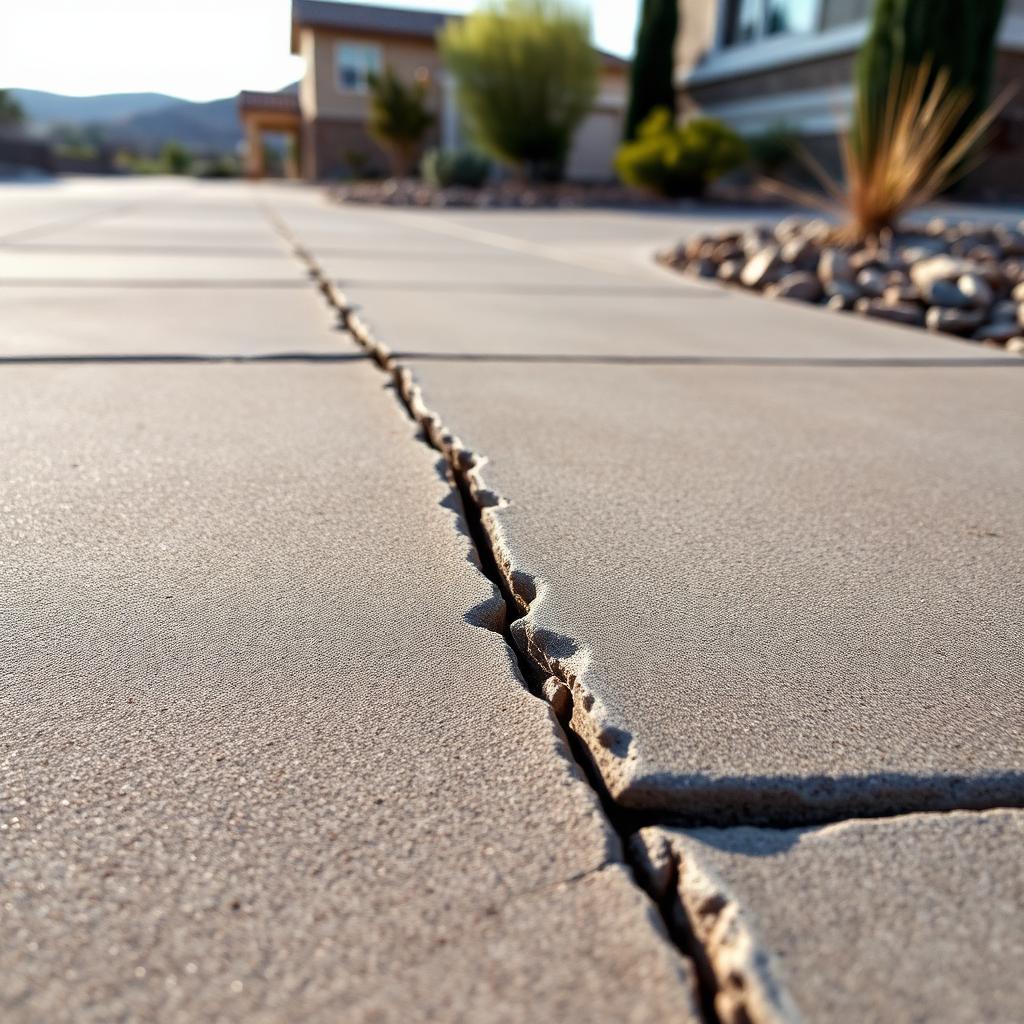
Cracks That Deserve a Closer Look
Certain cracks are more likely to indicate settlement or soil movement:
- Cracks wider than 1/4 inch
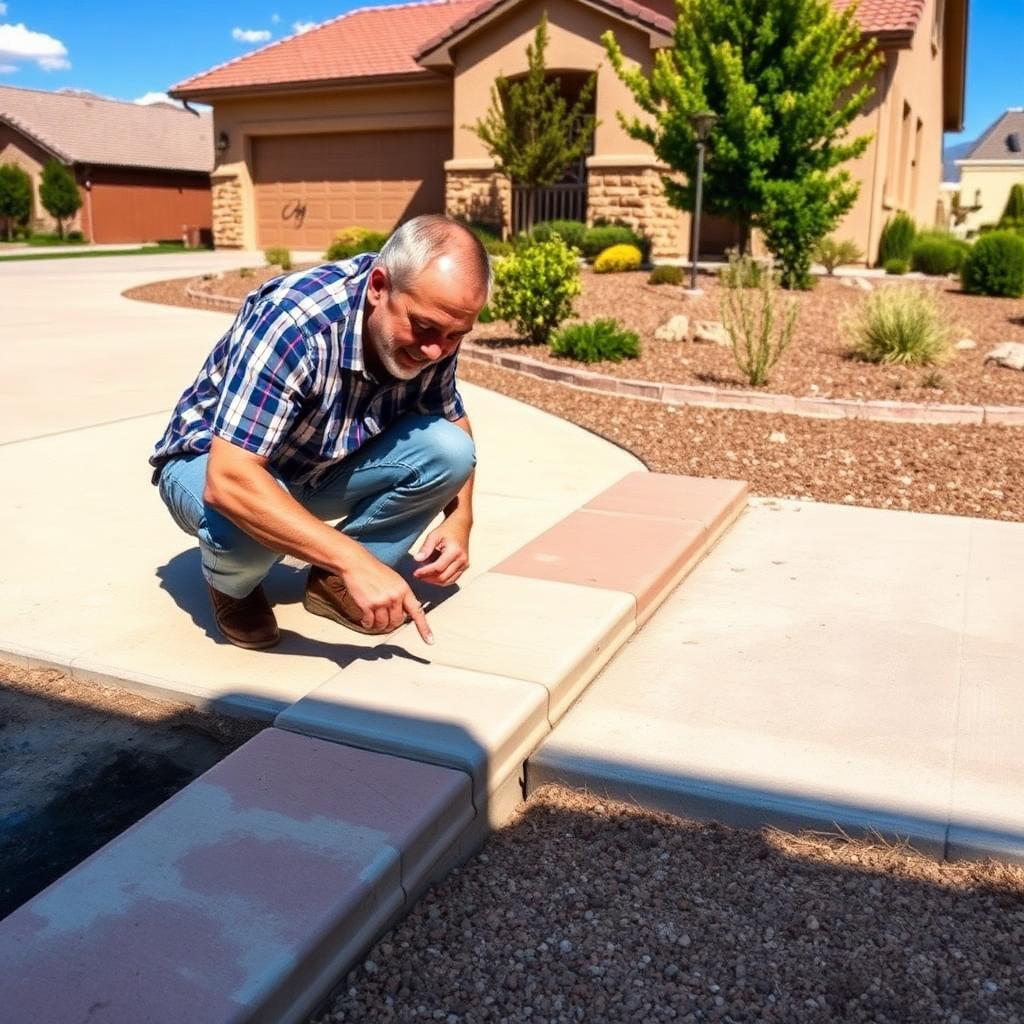
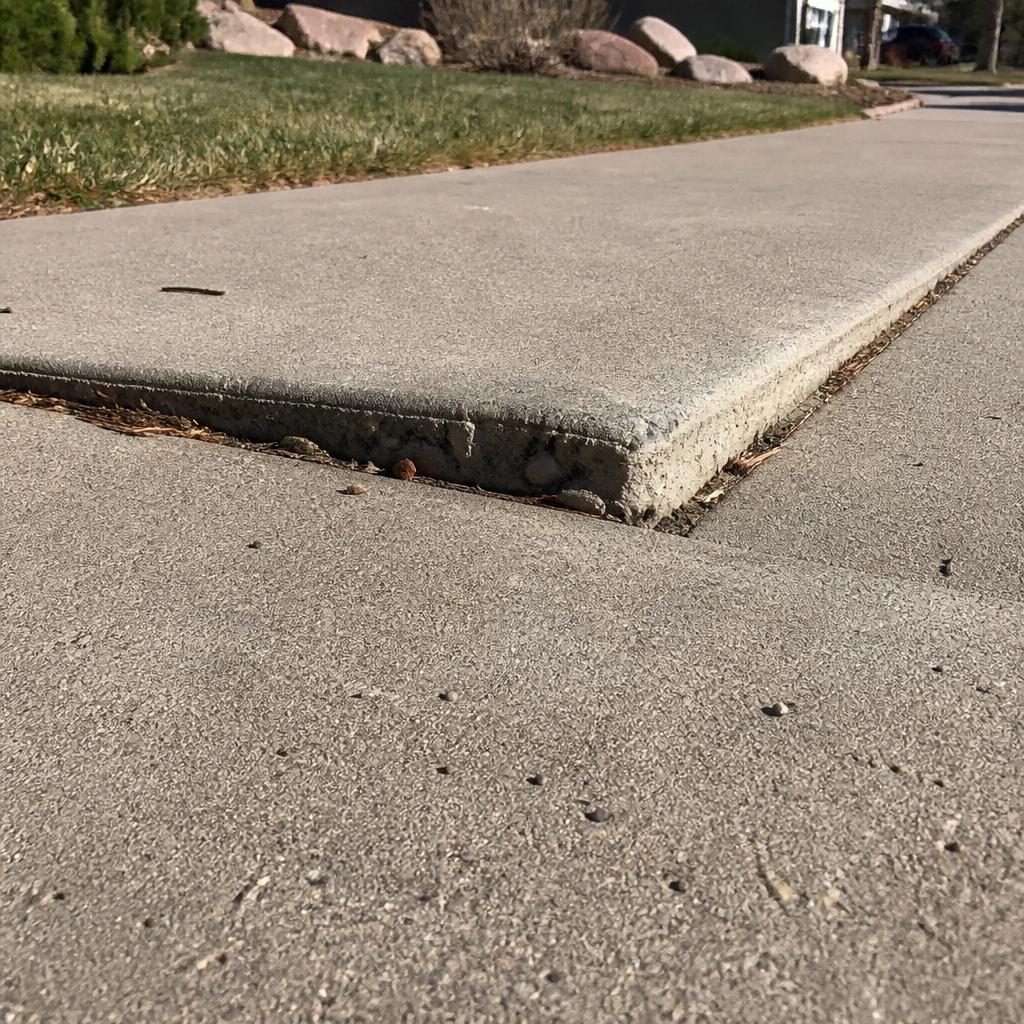
- Cracks with one side sitting higher than the other (a vertical offset)
- Cracks that continue to grow from one season to the next
- Diagonal cracks running across a slab rather than along a joint
- Cracks paired with water pooling nearby
- Cracks near the garage apron where a driveway meets the foundation
The offset is often more important than the width. A hairline crack with a 3/8-inch vertical difference across it is telling you the slab has moved. See our guide to water pooling on your driveway for what that combination usually means.
Cracks Specific to Expansive Clay Country
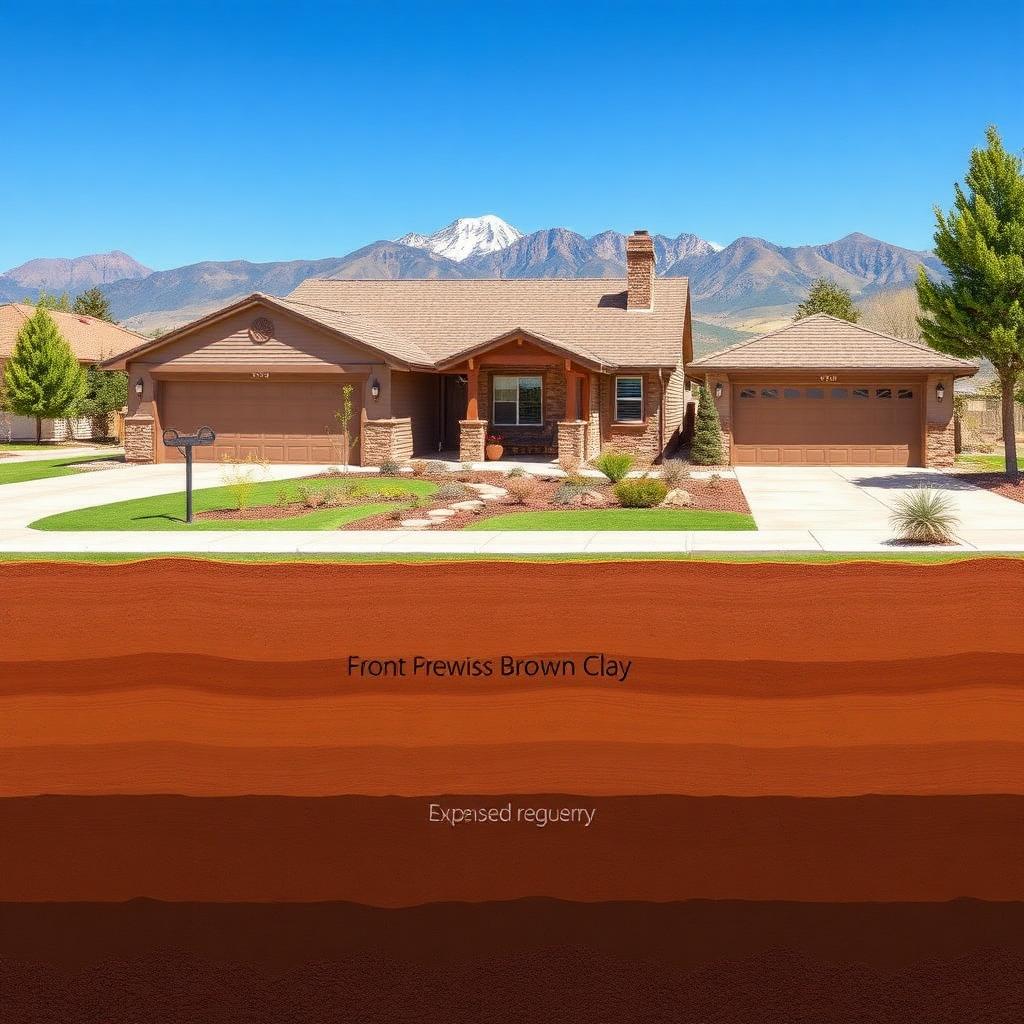
Neighborhoods across Colorado Springs — Briargate, Rockrimmon, parts of the Broadmoor, Falcon, Monument, and much of Black Forest — sit on soils rich in expansive clay from the Pierre shale formation. These soils can heave several inches vertically as they wet and dry through the seasons.
On clay-heavy lots, cracks often appear along a distinctive pattern: a slab tilts down at the outside edge (where soil dries out faster), pulls slightly away from the house, and develops a diagonal crack from a corner. If that description matches what you're seeing, our article on how Colorado Springs expansive clay soil affects more than just concrete explains the mechanism.
How to Monitor a Crack
The single most useful thing a homeowner can do is track changes over time:
- Photograph the crack from the same angle each spring and fall
- Include a coin or ruler in the frame for scale
- Note whether the crack widens, lengthens, or gains a vertical offset
- Watch for water pooling that develops along the crack line
- Check whether nearby doors, gates, or fences begin to bind or misalign
A crack that hasn't changed in three or four seasons is almost always cosmetic. A crack that grew over the past winter is worth an evaluation.
When Leveling Solves It vs. When It Doesn't
If a crack is the result of the slab settling, polyurethane foam concrete leveling can often lift the low side back into alignment and eliminate the offset. The crack itself remains, but the slab is level, safe, and draining properly again.
If the concrete is severely deteriorated — extensive spalling, multiple broken pieces, exposed rebar — replacement is usually the better long-term choice. Our comparison of concrete leveling vs. replacement walks through where the line is.
See also our related guide on whether cracked concrete can be leveled for a closer look at which cracks are compatible with lifting.
Frequently Asked Questions
Are all concrete cracks serious?
No. Many are cosmetic shrinkage or freeze-thaw cracks that remain stable for years. The ones that deserve attention are wider than 1/4 inch, have a vertical offset, or grow from season to season.
Does the Colorado Springs climate cause more cracks than average?
Yes. The combination of high-elevation freeze-thaw cycles, expansive clay soils, and chinook-driven snowmelt puts more stress on slabs here than in most parts of the country.
Can a cracked slab still be leveled?
In most cases, yes. Foam lifting can raise a settled cracked slab back to grade as long as the concrete is still structurally intact. Severely deteriorated slabs may need replacement instead.
How wide does a crack need to be before it's a problem?
Width alone is a rough guide — a crack wider than a credit card (about 1/16 inch) is worth monitoring. A crack with a vertical offset of any width is more significant than a wide, flat crack.
Schedule a Free Evaluation
If a crack in your driveway, sidewalk, or patio has widened, developed an offset, or appeared alongside new pooling water, an on-site look is the fastest way to know what it means. Colorado Springs Concrete Leveling provides free estimates throughout Colorado Springs and the Front Range communities we serve.
Call 719-521-2291 or request your free estimate online to have a specialist evaluate the crack in person.