From 100+ freeze-thaw cycles a year to chinook snowmelt and expansive clay beneath the slab, Colorado Springs winters put outdoor concrete through more stress than most homeowners realize. Here's what to watch for — and how to protect your driveway, sidewalk, and patio.
Colorado Springs sits at roughly 6,000 feet along the Front Range, and that elevation shapes almost everything about how winter treats outdoor concrete. Cold nights, intense midday sun, dry chinook winds, and rapid snowmelt combine to push slabs through more freeze-thaw stress than a homeowner in a milder climate would ever see.
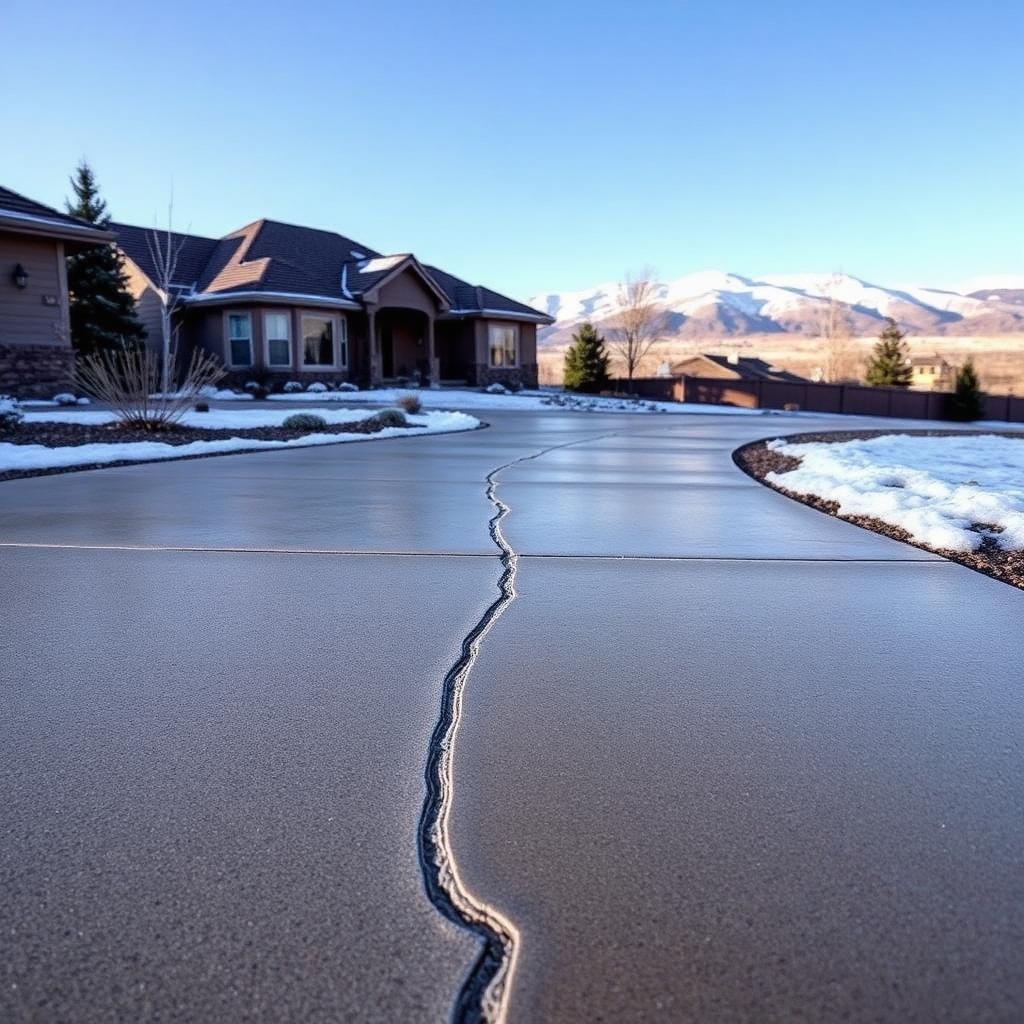
The National Weather Service typically records more than 100 freeze-thaw cycles per year in this part of the Front Range — roughly one every three days from October through April. Each cycle is a small movement in the concrete and, more importantly, in the soil beneath it. Over years, those small movements are how driveways, sidewalks, and patios end up uneven. For a broader look at what's happening under the slab, see why concrete sinks in Colorado Springs.
What Is a Freeze-Thaw Cycle?
A freeze-thaw cycle happens whenever water in and around the concrete freezes and then thaws again. In Colorado Springs, that pattern is unusually common because daytime temperatures often climb well above freezing even in January, while overnight lows drop into the teens or single digits.
Water expands roughly nine percent when it freezes. When that expansion happens inside a hairline crack, a control joint, or a saturated pocket of soil under the slab, it slowly widens whatever weakness is already there.
The Winter Conditions That Matter Most Here
Several Colorado Springs-specific patterns combine to affect outdoor concrete:
- Frequent freeze-thaw cycles (100+ per year along the Front Range)
- Chinook winds that cause rapid, mid-winter snowmelt
- High-altitude sun that melts south-facing slabs even in cold weather
- Expansive clay soils derived from Pierre shale that swell when wet and shrink when dry
- Concentrated runoff from foothills-adjacent lots (Rockrimmon, Broadmoor bluffs, Black Forest)
- Deicing chemicals from roads carried onto driveways by tires
None of these alone will damage a healthy slab overnight, but together they explain why local homeowners often notice new settlement in the first weeks of spring. When leveling becomes the right answer, our comparison of concrete leveling vs. concrete replacement walks through the trade-offs.
Driveways
Driveways carry the heaviest winter load — vehicle weight, salt-laden slush, and repeated snow removal. Watch through the winter and into early spring for:
- Water pooling near the garage apron after snow melts
- New offsets across a control joint
- Fresh hairline cracks that weren't there in the fall
- Areas where ice repeatedly forms in the same low spot
If you notice any of these, our guide to why water is pooling on your driveway explains what that combination often means, and driveway leveling covers the repair options.
Sidewalks
In Colorado Springs, city sidewalk maintenance is generally the adjacent property owner's responsibility — and winter is when trip hazards become both more dangerous and less visible. A quarter-inch offset that was easy to see in October gets buried under snow in December and revealed as a lawsuit risk in April.
After each significant snowmelt, walk the front-of-house sidewalk and look for raised panels, separation between slabs, and standing water. A single sidewalk leveling visit can usually correct most of what a winter reveals.
Patios and Back-of-House Slabs
Patios are especially vulnerable because they often sit right against the foundation, where drainage matters most. When a patio settles even a fraction of an inch toward the house, snowmelt runs the wrong direction. Look for furniture that no longer sits level, low spots that hold water for days after a melt, and separation between the patio and the house. See patio leveling for how those slabs are typically restored.
Drainage Is the Long Game
The single most effective thing a Colorado Springs homeowner can do to protect concrete through winter is manage where water goes. Before the first freeze, check:
- Gutters and downspouts (extend downspouts 4-6 feet from slabs)
- Grading around the driveway and patio
- Irrigation heads that spray onto concrete
- Low spots where snow tends to pile up and refreeze
For a practical checklist, read downspouts and slab settlement and our spring concrete inspection checklist for Colorado Springs homeowners.
Deicing Chemicals and Concrete
Most driveway deicers accelerate freeze-thaw damage rather than protect against it. Rock salt (sodium chloride) and magnesium chloride both push additional water into the slab surface, where the next freeze can spall it. If deicing is necessary, use it sparingly and rinse the slab once temperatures allow.
Spring Is When Winter's Damage Shows Up
Most of what winter does to concrete becomes visible in March and April, once the ground thaws and settlement finishes moving. That's why spring is by far the busiest time of year for evaluations in Colorado Springs. Photographing your slabs from the same angles each spring makes gradual changes far easier to spot.
Frequently Asked Questions
How many freeze-thaw cycles does Colorado Springs actually get?
More than 100 in a typical year along the Front Range — noticeably more than most of the country. That volume, combined with expansive clay soils, is the main reason concrete settlement is such a common local issue.
Is concrete leveling possible in winter?
Often, yes. Polyurethane foam cures well in cold temperatures, and many Colorado Springs projects can be completed during mild winter windows. Severe cold or frozen soil may cause a temporary delay, but winter is rarely a hard stop.
Do south-facing slabs behave differently?
Yes. High-altitude sun can push south-facing slab temperatures well above freezing even on cold days, meaning those slabs cycle more often and often show earlier signs of settlement.
Should I sealcoat my driveway before winter?
A quality penetrating sealer applied every few years can help reduce moisture intrusion, which reduces freeze-thaw stress at the surface. It won't fix settlement, but it does slow the deterioration cycle.
Schedule a Free Evaluation
If your driveway, sidewalk, or patio didn't look quite the same after last winter, spring is the ideal time to have it evaluated. Colorado Springs Concrete Leveling provides free on-site estimates throughout Colorado Springs and the surrounding Front Range communities we serve.
Call 719-521-2291 or request your free estimate online to discuss your project.