Fall is the highest-leverage window for concrete maintenance on the Front Range. A few hours of work in September or October keeps 100+ freeze-thaw cycles from doing quiet damage all winter. Here's the full Colorado Springs checklist.
In Colorado Springs, fall is when your driveway, sidewalks, and patios quietly go into their hardest season. Between late October and early April, the Front Range typically runs through the bulk of its **100+ annual freeze-thaw cycles**, and every joint, crack, and drainage flaw becomes an opening for water to find the sub-base.
Spending a Saturday in September or October on concrete maintenance is one of the highest-leverage things a homeowner can do here. The whole checklist below usually takes an afternoon and costs less than $75 in materials.
Why Fall Beats Spring for Prevention
Spring inspections (see our spring concrete inspection checklist for Colorado Springs homeowners) tell you what winter *did*. Fall maintenance controls what winter *can do*. Two reasons fall wins for prevention:
- Sealants and patching materials cure well in Colorado Springs' typical 45–70°F fall daytime range
- Any small fix now is protected all winter, instead of stewing under snowmelt for six months first
The Full Checklist
1. Walk the Property with a Clipboard
Same 20-minute walk-around used for spotting trip hazards. Note settled panels, hairline cracks, opened joints, spalled edges, and any low spots that already puddle. Take dated phone photos of anything questionable — this becomes your baseline for spring.
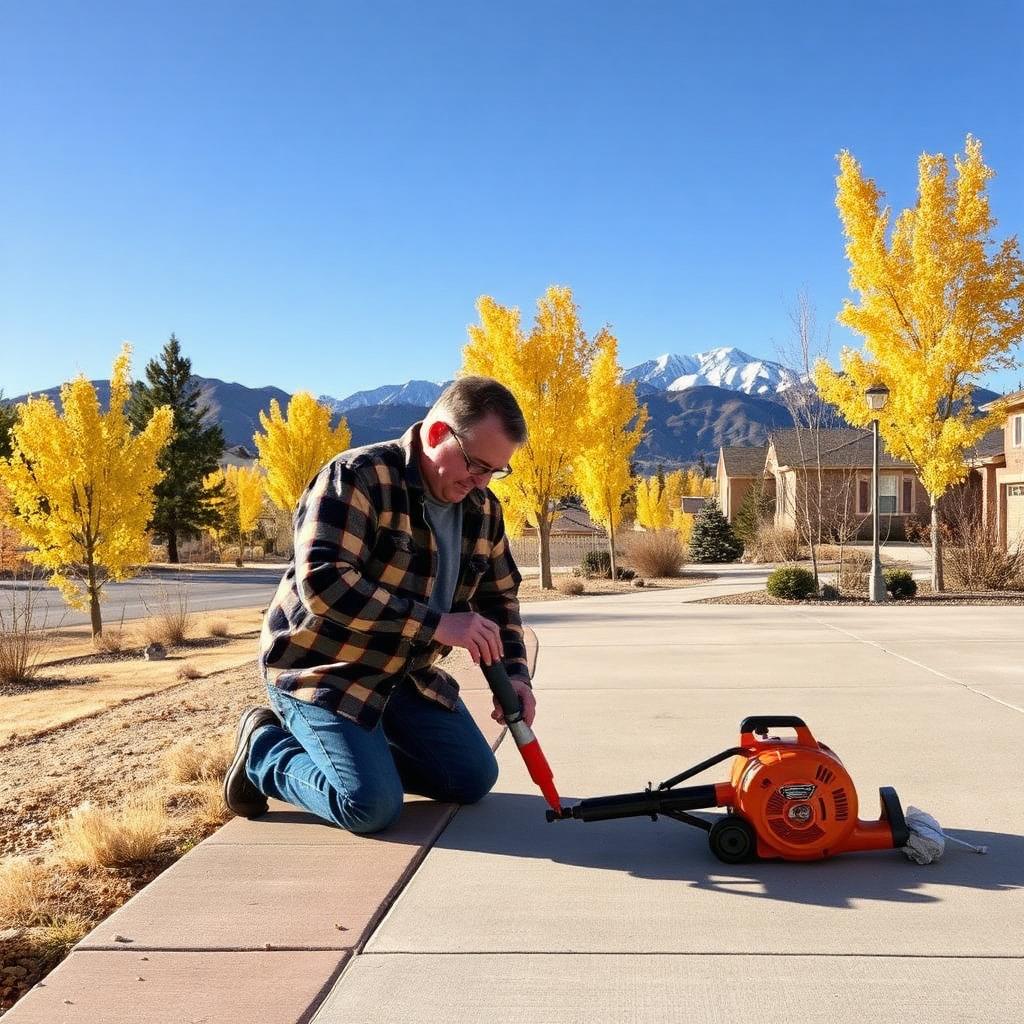
2. Clean Every Joint and Crack
Sealant only holds when the surface underneath is clean and dry. For each control joint, expansion joint, or hairline crack:
- Blow it out with a leaf blower or shop vacuum
- Scrub with a stiff wire brush to remove loose material
- Wait for a dry day — no rain in the forecast for 24–48 hours
3. Reseal Joints and Cracks
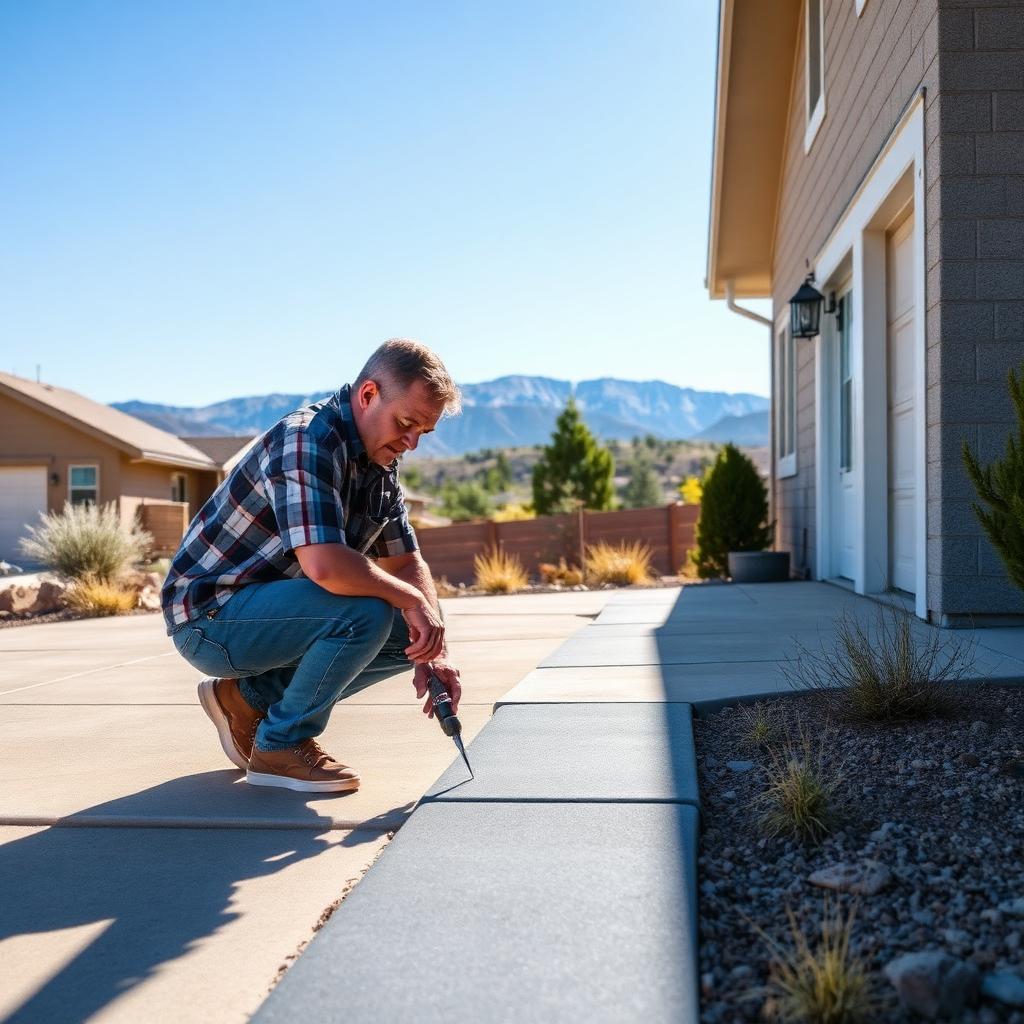
Use a **self-leveling polyurethane joint sealant**. It stays flexible through Front Range freeze-thaw where silicone or rigid caulk cracks by January. For joints wider than about 3/8 inch, drop in a foam **backer rod** first to keep the sealant at the right depth. Our what are expansion joints and why do they matter covers the theory.
4. Extend and Clear Downspouts
Every downspout should discharge **at least 6 feet** from any driveway, sidewalk, or foundation slab. Reattach any extensions that came off over the summer, clear the gutters, and check that any buried drain lines still daylight and drain. This one fix prevents more Colorado Springs settlement than any other single action — see downspouts and slab settlement.
5. Winterize Sprinklers Before They Damage the Slab
Blow out the irrigation system before the first hard freeze (usually mid-October in Colorado Springs). Skipped or half-done blowouts leave water in valves and heads that split during a freeze and dump into the sub-base under the concrete all winter. While you're at it, adjust any head that was hitting the driveway or sidewalk.
6. Reset Grading Where Beds Have Slumped
Landscape beds settle and often end up pitching *toward* the slab or foundation instead of away. Rake and reset any bed within 3–4 feet of concrete so it drops at least 6 inches over the first 10 feet away from the house.
7. Stage the Right Deicer
Do not use rock salt on Colorado Springs residential concrete — it chemically attacks the surface and accelerates spalling. Stage the winter's deicer *before* the first storm:
- **Sand** for pure traction — no chemistry, no damage
- **Magnesium chloride** or **calcium chloride** when melting is required — safer on concrete than sodium chloride
- Sprinkle sparingly and shovel first
8. Consider a Penetrating Sealer
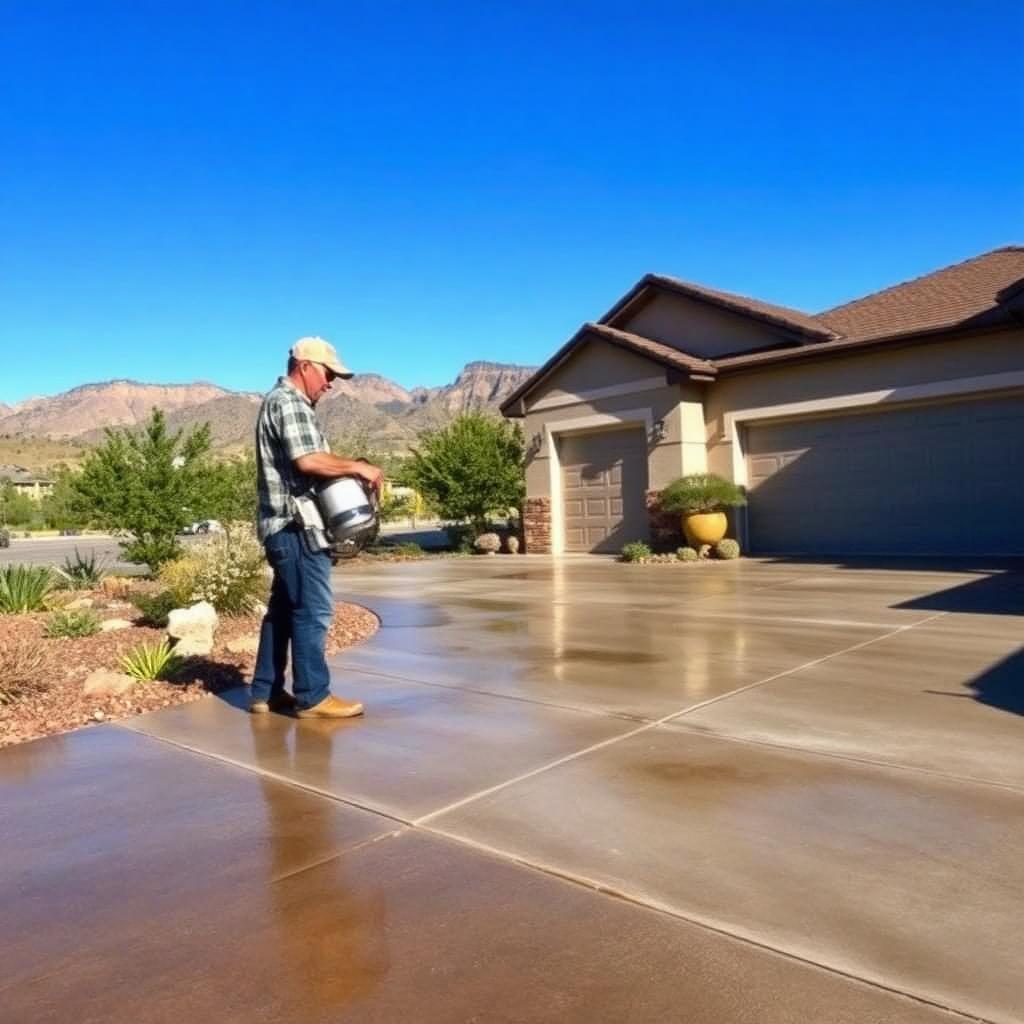
If the driveway hasn't been sealed in 3+ years, a **silane/siloxane penetrating sealer** applied on a mild fall day reduces the moisture absorption that drives freeze-thaw spalling. It doesn't change appearance and adds a few years to surface life on Colorado Springs slabs.
9. Stock a Small Snow Kit by the Door
A poly-blade shovel (not metal), a bag of magnesium chloride, a small tub of sand, and a headlamp by the garage door. Shovel-first, then treat only what stays icy — most freeze-thaw damage on residential slabs comes from repeated melt-and-refreeze cycles, not from snow itself.
10. Photograph the Baseline
Before the first storm, take dated photos of any settled sections, wide cracks, or trip hazards. In April, comparing photos side-by-side tells you objectively whether things moved over winter — and whether it's time to lift.
What to Skip in Fall
- **New pours** — Colorado Springs weather is too unpredictable in October and November; wait for spring
- **Acid etching or aggressive cleaning** — surface damage right before freeze-thaw makes spalling worse
- **Concrete leveling on a marginal-weather day** — schedule it for a stretch of dry, above-freezing days
When Fall Maintenance Isn't Enough
If your walk-around finds settlement of more than about 1/2 inch, an active trip hazard, or a slab pulling away from the house, sealant and downspout tweaks won't fix it. Those are lifting decisions. See should you repair uneven concrete now or wait. Foam leveling can typically still be scheduled through mid-November in Colorado Springs, and often into the winter on above-freezing days.
Frequently Asked Questions
When is the last practical week for outdoor concrete maintenance in Colorado Springs?
Sealants and patching materials typically cure well through late October, and often into mid-November if daytime highs stay above about 45°F. After that, wait for a warm Chinook-window day or plan for spring.
Do I really need to reseal joints every year?
Not every year — every 2–3 seasons is the usual rhythm here. Inspect them each fall and reseal only the ones that have cracked, pulled away, or dropped out.
Is a driveway sealer worth the money in Colorado Springs?
For most homeowners, yes — modestly. See our detailed do concrete sealers actually help in Colorado Springs for the real-world impact.
Should I patch small cracks or leave them alone?
Any crack wider than a business card is worth sealing before winter. Below that, sealing is optional but cheap insurance — a $10 tube of polyurethane sealant keeps ten years of freeze-thaw water out of the sub-base.
Final Thoughts
The Colorado Springs freeze-thaw calendar is unforgiving, but it's also predictable. An afternoon of fall maintenance measurably shortens the list of spring surprises and adds real years to residential concrete.
If your fall walk-around turned up settlement that's past the sealant-and-downspout stage, contact Colorado Springs Concrete Leveling for a free on-site walkthrough. Call 719-521-2291 or request an estimate online.
Related reading: spring concrete inspection checklist for Colorado Springs homeowners, how Colorado Springs winters affect concrete, and 10 ways Colorado Springs homeowners can help prevent concrete settlement.