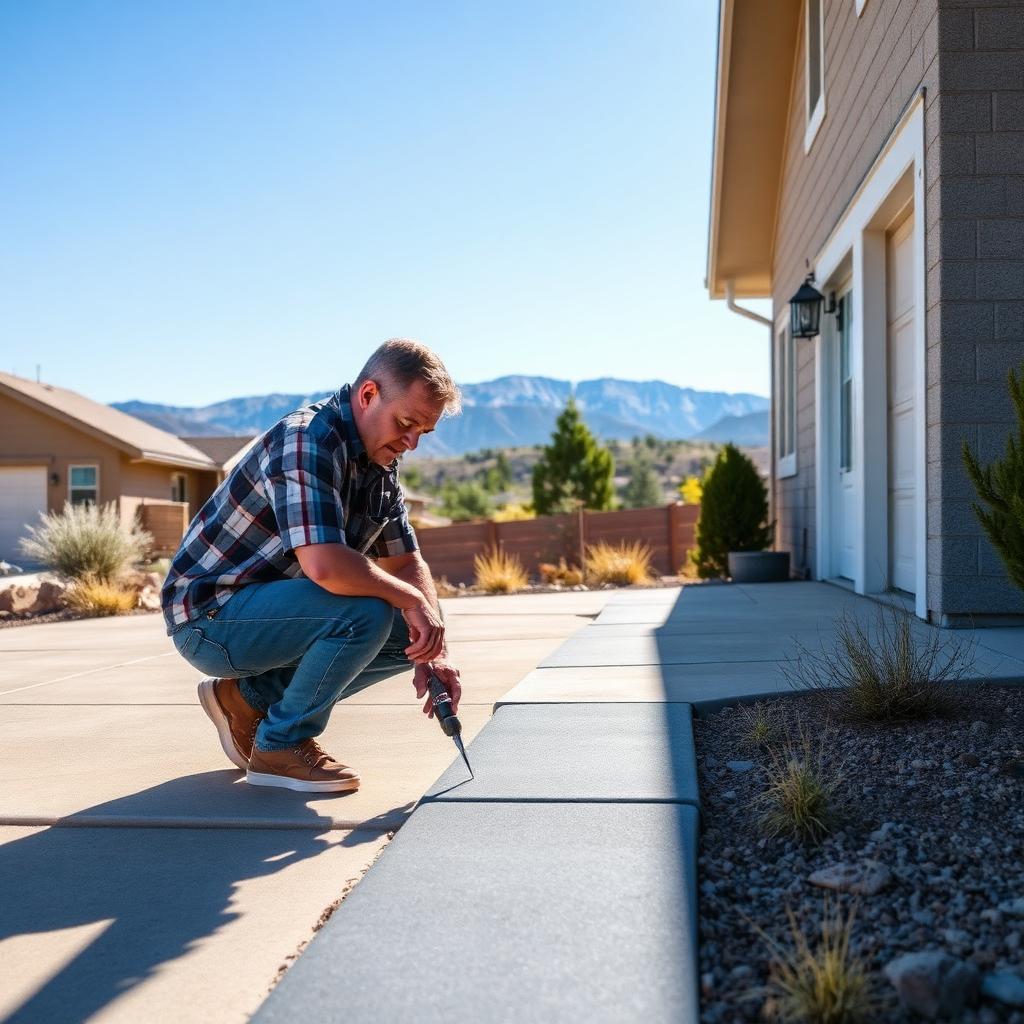
Concrete sealers are one of the most-hyped and least-understood maintenance products on the Front Range. Here's a straight answer on which sealers actually help Colorado Springs concrete, which are marketing, and when to apply them.
Concrete sealers get pitched as everything from a stain-fighter to a spalling cure to a driveway life-extender. In Colorado Springs — where UV, freeze-thaw, and deicers all wear the surface hard — the actual answer is more nuanced. Some sealers meaningfully extend the life of a driveway. Others are cosmetic. And a sealer applied to the wrong slab wastes money and can even cause harm.
Here's what actually helps on Front Range concrete, and when the money is better spent elsewhere.
What a Sealer Can and Can't Do
A sealer's job is to reduce how much water and dissolved deicer soaks into the top of the slab. That matters in Colorado Springs because:
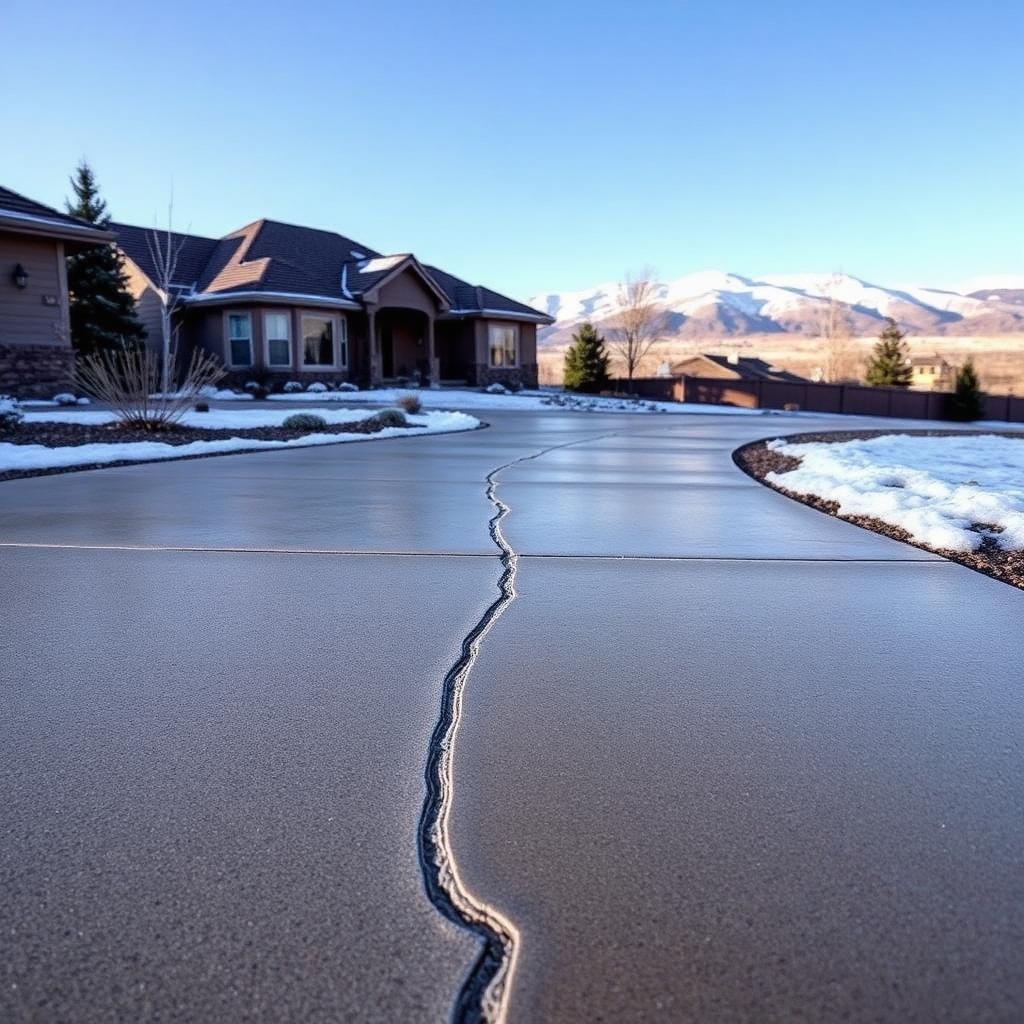
- **Freeze-thaw damage** starts with water absorbed into surface pores, then freezing and expanding
- **Deicer scaling** happens when chloride solutions penetrate and repeatedly recrystallize
- **UV and oxidation** slowly break down surface paste at high elevation
A good sealer, applied to a suitable slab, reduces all three. What it does *not* do:
- Lift a settled slab (that's leveling — see polyurethane foam vs. mudjacking)
- Rebuild spalled or crumbling surface
- Bridge structural cracks
- Stop movement from expansive clay below
If the slab is settled, cracked wide, or actively crumbling, no sealer solves the underlying problem.
The Sealer Types (and Which Ones Belong on Colorado Springs Driveways)
1. Penetrating Sealers (Silane/Siloxane) — The Real Answer for Driveways
Silane and siloxane penetrating sealers soak into the top few millimeters of concrete and chemically bond, forming a hydrophobic layer *inside* the surface. Water beads and sheds; deicer solutions don't wick in as easily. Appearance barely changes.
**Why they win in Colorado Springs:** UV-stable, freeze-thaw compatible, allow vapor transmission (so trapped moisture can still escape), and last 3–7 years per application. Downsides: cost more per gallon than film-formers, don't add sheen or color.
2. Acrylic Sealers — Decorative, Not Structural
Acrylics sit *on top* of the slab as a thin film. They add a wet or glossy look and can enhance color on stained or stamped work. Reapplication is easy.
**Trade-offs on the Front Range:** wear off in 1–3 years on high-traffic slabs, can trap moisture on slabs that get wet from below (a real problem on Colorado Springs expansive clay), can turn slick when wet. Fine for a decorative patio; wrong choice for a working driveway.
3. Polyurethane and Epoxy Sealers — Interior Use
Excellent for garage floors and interior commercial slabs. Not typically recommended outdoors in Colorado Springs — UV and freeze-thaw degrade them faster than the manufacturer's spec suggests.
4. Densifiers (Lithium/Sodium Silicate)
React with the concrete to harden the surface. Excellent for polished commercial floors; less relevant for residential exterior work in Colorado Springs unless combined with a penetrating sealer.
How Often to Reseal
- **Penetrating (silane/siloxane) on a residential driveway:** every 4–5 years, or after any water-beading test starts to fail
- **Acrylic on a decorative patio:** every 1–3 years, more often if it sees full sun
- **Any sealer, first application on a new pour:** wait at least 28 days after the pour, ideally longer
The water-beading test is the easiest field check: sprinkle water on a dry slab. If it beads and sheets off, the sealer's still working. If it soaks in and darkens the concrete, it's time to reseal.
When Not to Seal
A sealer applied at the wrong moment can trap moisture and make things worse. Skip or delay sealing when:
- The slab is actively **wet** or a rain event is within 24 hours
- Surface temperature is below **50°F** or above about **90°F** during application
- The slab is spalling or losing surface — seal it and you seal the failure in place
- The slab is settling or has active structural cracks — fix the movement first
- It hasn't been at least 28 days since a new pour
Realistic Cost in Colorado Springs
For a typical 500 sq ft residential driveway:
- **DIY penetrating sealer** (material only): $60–$150 depending on product
- **Professional application** of a quality penetrating sealer: $300–$700
- **DIY acrylic on a stamped patio** (material only): $40–$120
- **Professional acrylic on a decorative patio:** $250–$500 depending on size
Compared to the cost of premature spalling repair or full replacement, a penetrating sealer every 4–5 years is one of the highest-return maintenance investments on a Colorado Springs driveway.
How to Apply a Penetrating Sealer
- Wait for a dry stretch — no rain 24 hours before, 24 hours after, temperature 55–80°F
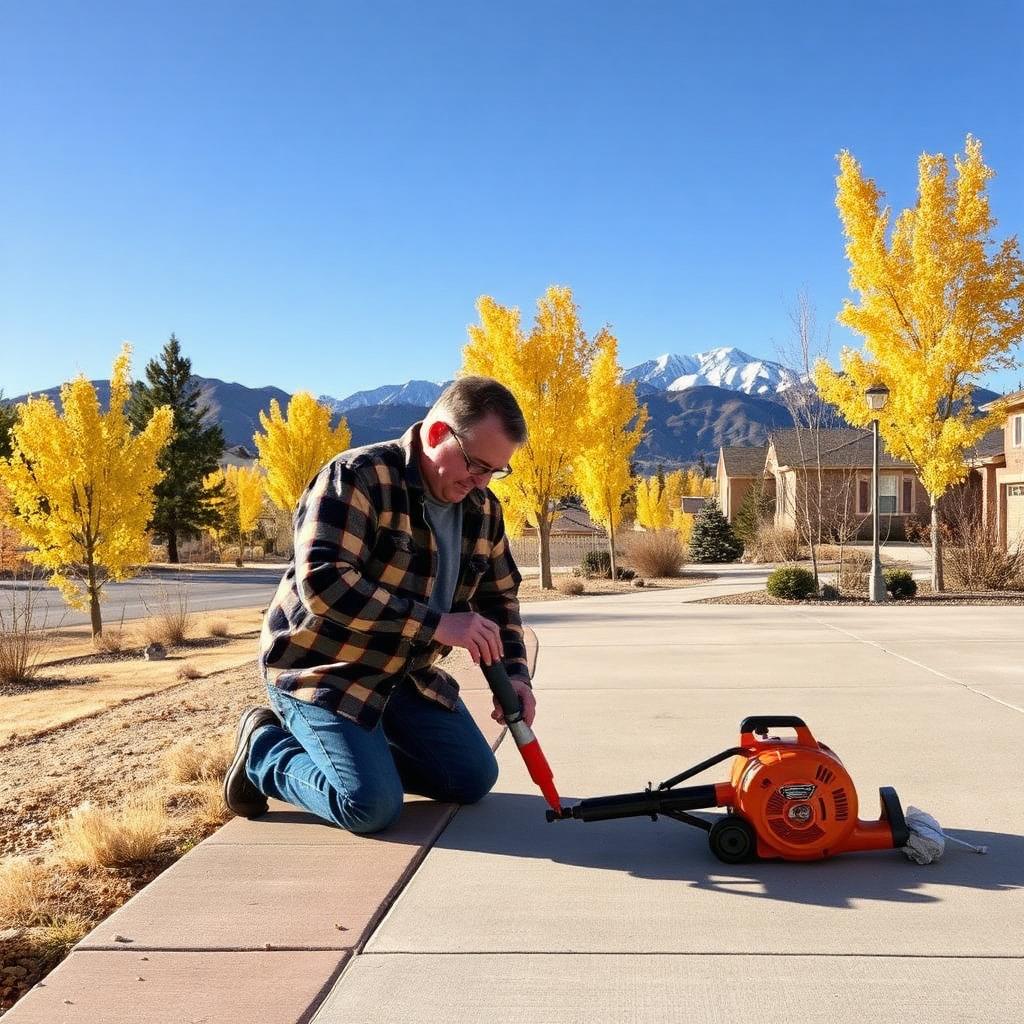
- Clean the slab thoroughly (pressure wash if grimy, then let dry fully — usually a full day)
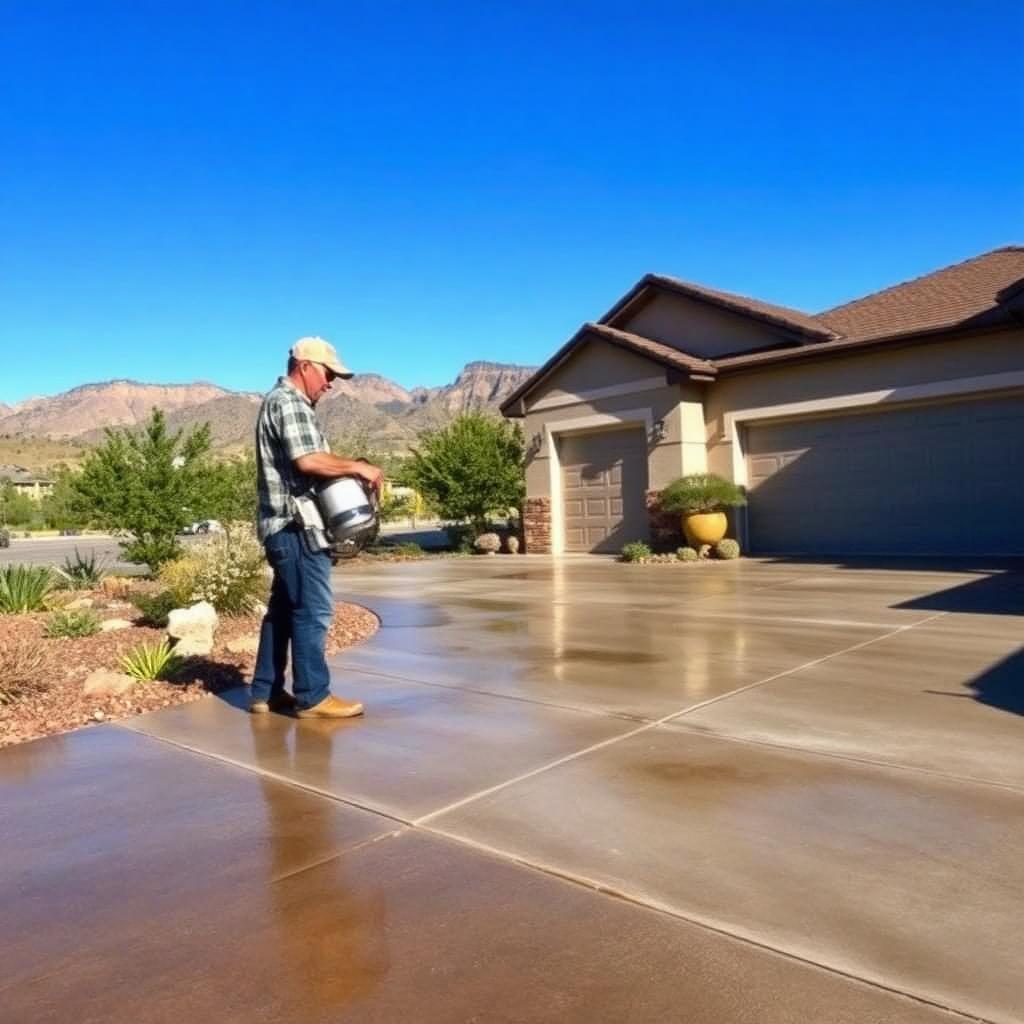
- Apply with a **pump sprayer** and back-roll with a solvent-resistant roller
- Two thin coats beats one heavy one — pooled sealer just evaporates without penetrating
- Keep foot traffic off for 4 hours, vehicle traffic off for 24
Where Sealing Fits in the Bigger Picture
Sealing is a **surface protection** step. It works best on structurally sound Colorado Springs slabs where drainage, joints, and deicer choice are already handled. If those aren't handled, sealer is putting a raincoat on a broken window. See our fall concrete maintenance checklist for how sealing sits inside the full annual routine.
Frequently Asked Questions
Will a sealer stop my driveway from cracking?
No. Sealers reduce surface water absorption but do nothing about the expansive clay and freeze-thaw movement that drive cracks. They slow *surface* deterioration, not structural failure.
Can I seal over existing cracks?
You can seal a slab that has hairline cracks, but any crack wider than a business card should be cleaned and sealed with a polyurethane joint sealant *first*, then the whole slab sealed on top.
Is there a sealer that will make my driveway look like new?
Not really. Acrylic film-formers add wet-look sheen, but they don't hide surface wear, staining, or spalling on an old slab. If appearance is the goal, resurfacing or replacement is the honest answer.
Does sealing help with deicer damage?
Yes — meaningfully. A quality penetrating sealer significantly reduces chloride penetration, which is the main mechanism behind deicer scaling on Colorado Springs concrete. It doesn't make rock salt safe, though — sand or magnesium chloride is still the right choice.
Final Thoughts
A silane/siloxane penetrating sealer applied every 4–5 years is one of the cheapest, highest-return maintenance moves a Colorado Springs homeowner can make on a structurally sound driveway. Acrylics have their place on decorative concrete, but they're not the answer for a working driveway that sees deicer and freeze-thaw.
If your slab is settling or cracking beyond what a sealer can help with, contact Colorado Springs Concrete Leveling for a free on-site walkthrough. Call 719-521-2291 or request an estimate online.
Related reading: fall concrete maintenance checklist for Colorado Springs homeowners, how Colorado Springs winters affect concrete, and what are expansion joints and why do they matter.