A proactive walkway maintenance program is the cheapest liability protection a Colorado Springs business can buy. Here's what to inspect, how often, and how to build a repair budget that stays ahead of the Front Range freeze-thaw cycle.
For a Colorado Springs business, the concrete customers walk on is legal exposure, customer-experience signal, and long-term capital expense all at once. Handled reactively, it's expensive on every axis — trip-and-fall claims, deferred maintenance that turns into replacement, and entryways that make a small business look tired.
Handled with a simple maintenance program, the same slabs quietly last decades on the Front Range. This is what a workable program looks like for a small-to-mid Colorado Springs commercial property.
Why Commercial Walkways Fail Faster Here
Front Range conditions stress commercial concrete harder than residential:
- **Foot traffic volume** wears surfaces and opens joints faster than a residential driveway
- **Heavy deicer use** during business hours accelerates surface spalling
- **Snow-plowing** chips edges and drives water into cracks
- **100+ freeze-thaw cycles** per year exploit any opening water finds
- **Expansive Pierre shale clay** underneath moves every year with irrigation and monsoon cycles
A commercial sidewalk on a busy Colorado Springs property can go from cosmetic to a real trip hazard in a single winter if drainage and joints have been ignored.
The Legal Baseline
Two standards drive most commercial walkway decisions in Colorado Springs:
- **ADA guidance:** vertical offsets over 1/4 inch on accessible routes are considered barriers; over 1/2 inch is almost always a violation
- **Premises liability:** business owners owe a heightened duty of care to invitees, meaning known hazards that go unrepaired are the classic negligence pattern
Our companion article on when should businesses repair uneven sidewalks in Colorado Springs covers the repair-timing side in more detail.
Inspection Cadence
Weekly (Walk-Through)
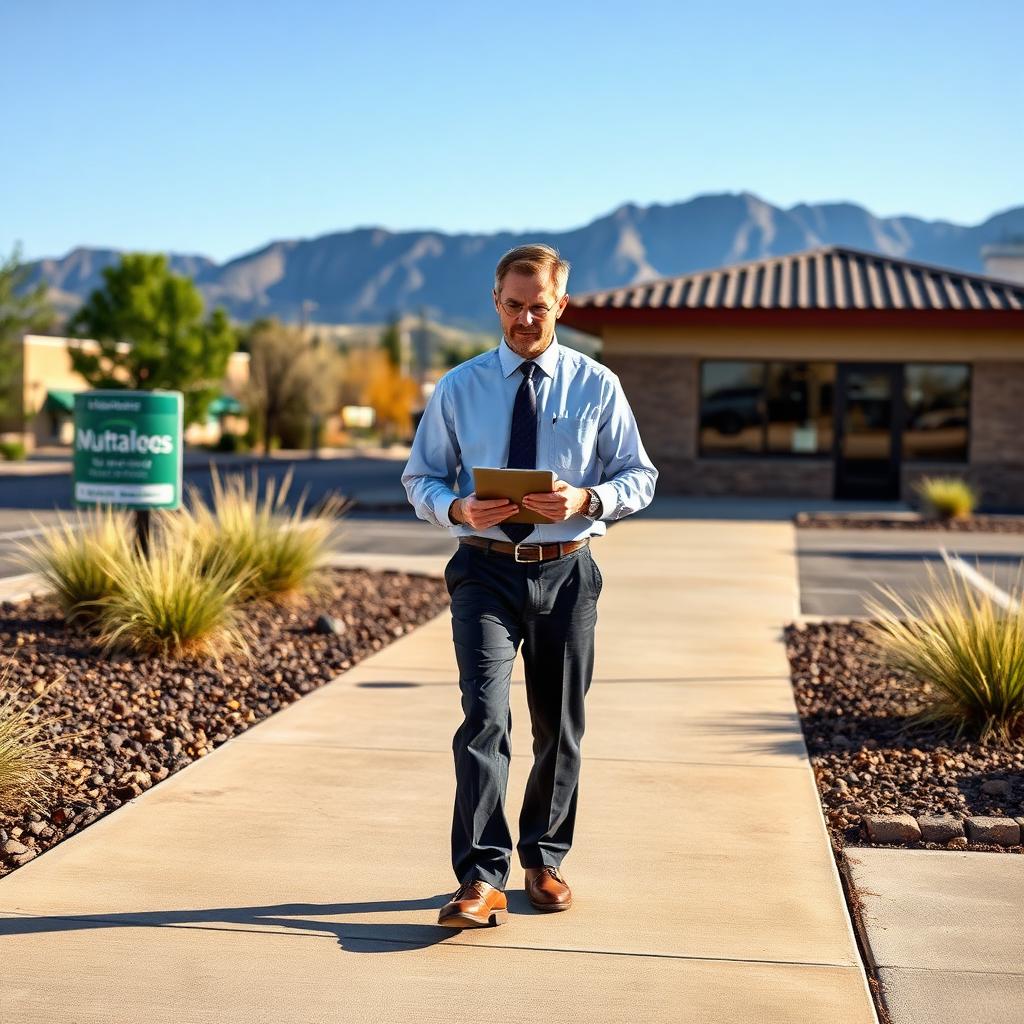
Store manager or facilities lead walks primary entryways, ADA routes, and any known trouble spots. Watch for new offsets, opened joints, standing water, deicer residue, and any surface change since the last walk. Log observations in a simple spreadsheet or facilities app — the log is what protects the business later.
Quarterly (Full Inventory)
Walk every exterior slab on the property with a tape measure. Photograph anything with a lip approaching 1/4 inch, and measure it. This is when small settlement gets caught before it's actionable.
Twice a Year (Contractor Assessment)
Ideally a **spring** walk to see what winter did and a **fall** walk to identify anything that needs sealing or lifting before freeze-thaw season. A leveling contractor's spring/fall assessment usually pays for itself in avoided emergency repairs.
The Maintenance Program
1. Drainage First
Every commercial walkway problem in Colorado Springs traces back to water. Roof drains, area drains, downspouts, and grading around the building all need to move water *away* from concrete quickly. See how poor drainage causes concrete settlement in Colorado Springs for the mechanism.
2. Joint Sealing Program
Reseal control and expansion joints every 2–3 years with a commercial-grade self-leveling polyurethane sealant. Have a contractor do it — the labor is inexpensive compared to the settlement it prevents.
3. Sensible Deicer Policy
Ban rock salt on commercial concrete under maintenance. Standardize on magnesium chloride or calcium chloride, apply sparingly, and sweep residue as soon as ice melts. Snow-first, chemistry-second.
4. Snow Removal Standards
Specify **poly-edged shovels or plow blades** in snow-removal contracts, and require crews to lift blades over any known transitions to prevent chipping. Most edge damage on commercial slabs comes from careless plowing, not weather.
5. Penetrating Sealer Every 3–5 Years
Silane/siloxane penetrating sealer on high-traffic entryways cuts deicer and moisture absorption and modestly extends surface life. Cheaper than resurfacing.
6. Lift Before You Replace
When settlement does show up, polyurethane foam leveling can typically restore a commercial walkway in a single overnight visit with minimal customer disruption. Replacement should be the last option, not the default. See polyurethane foam vs. mudjacking for how the process works, and commercial-scale warehouse floor leveling for a project write-up.
Budgeting
For a typical Colorado Springs small commercial property (retail suite, small office, restaurant), a realistic annual concrete maintenance budget looks like:
- **Inspection and photo log:** in-house labor — effectively free
- **Joint sealing (every 2–3 years, prorated annually):** $200–$800/year
- **Penetrating sealer on entryways (every 3–5 years, prorated):** $150–$500/year
- **Occasional lift of one to two settled panels:** $300–$900/year, averaged
- **Total annual concrete maintenance:** roughly $700–$2,200/year for most small commercial sites
One avoided trip-and-fall claim covers the entire program for a decade.
Documentation That Actually Helps
The point of the log isn't paperwork — it's evidence. In any premises-liability situation, being able to show:
- **Regular inspections** (dated log entries)
- **A response process** (measured hazards get flagged and addressed)
- **A repair history** (photos before and after leveling or resealing)
- **Standing contracts** with maintenance and repair providers
...routinely shifts negligence analysis in the property owner's favor. It's the single cheapest liability tool available.
Frequently Asked Questions
How quickly does a commercial trip hazard need to be repaired?
Any hazard over 1/2 inch on a customer-facing walkway should be repaired within days, and marked or blocked immediately. Hazards between 1/4 and 1/2 inch are typically scheduled within a few weeks. Anything on an ADA-accessible route is higher priority regardless of magnitude.
Can foam leveling be done during business hours?
Often yes, on non-primary walkways. Foam cures fast enough (about 15 minutes to walkable) that individual panels can be lifted and re-opened within a shift. For entryways and heavy-traffic areas, most Colorado Springs businesses schedule early morning or overnight.
Do I need to close the property to seal joints?
No. Sealing is done in short sections and cures fast enough that walkways can be reopened section-by-section without closing the property.
Is this really cheaper than reactive repair?
In our experience across Colorado Springs commercial work, yes — usually by a wide margin. A $500 lift caught early frequently prevents a $3,000+ panel replacement two winters later, plus whatever liability exposure accumulated in between.
Final Thoughts
The commercial properties in Colorado Springs with clean, level entryways aren't lucky — they're maintained. A simple inspection cadence, a joint sealing program, sensible deicer policy, and a lift-first repair philosophy quietly hold walkways for the life of the building.
For a professional assessment of your property's concrete and a walkway maintenance plan, contact Colorado Springs Concrete Leveling. Call 719-521-2291 or request an estimate online.
Related reading: when should businesses repair uneven sidewalks in Colorado Springs, how HOA communities can manage uneven sidewalks and common areas, and sidewalk trip hazard liability.