7 min read
Landscaping Choices That Protect (or Damage) Your Concrete
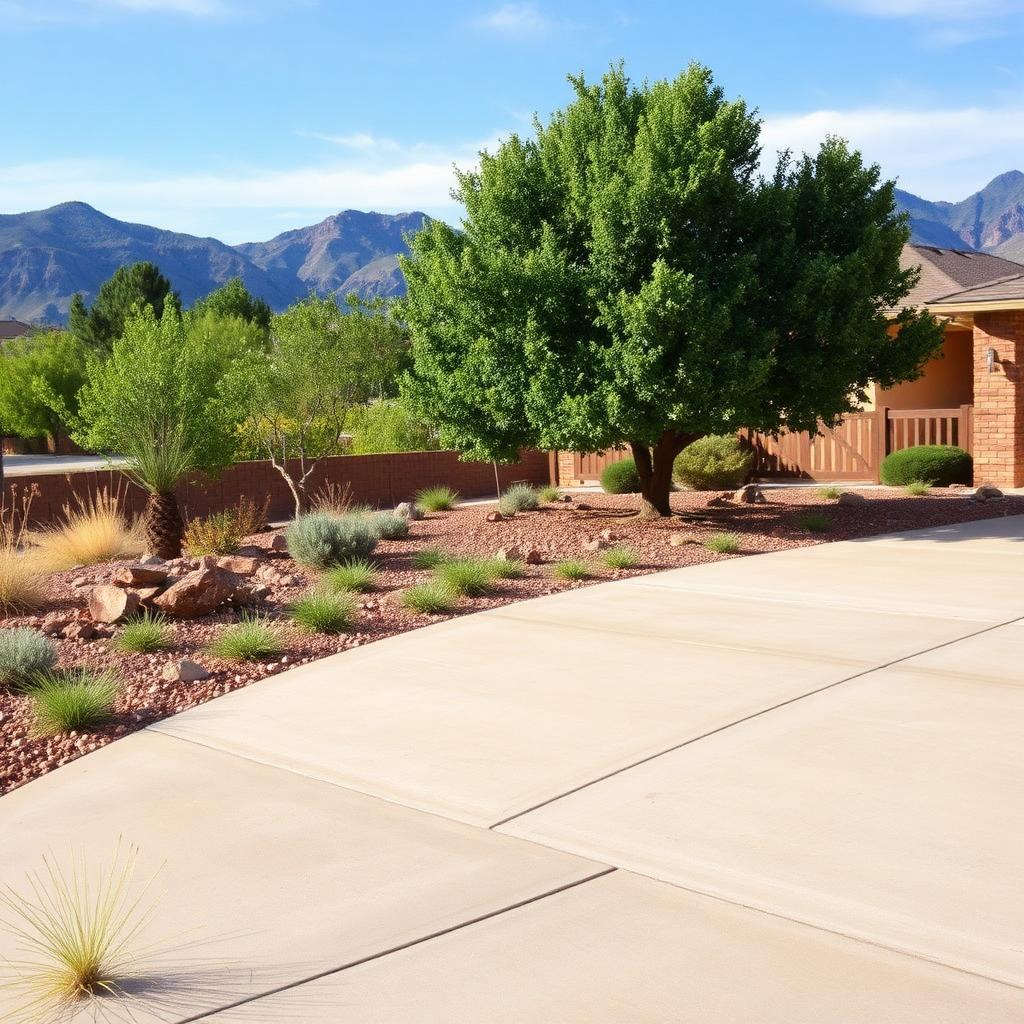
In Colorado Springs, the plants you put next to your driveway and patio matter as much as the concrete itself. Here's how to landscape so your slabs age well on Front Range clay.
Free 44-Page Homeowner Guide
Understand common causes of sinking concrete, repair versus replacement, contractor questions, and Colorado Springs–specific concrete concerns.
Free 44-Page Homeowner Guide
Understand common causes of sinking concrete, repair versus replacement, contractor questions, and Colorado Springs–specific concrete concerns.
We're here to help
Not every concrete problem requires an on-site visit.
Many questions can be answered with a quick phone call, helping you understand your options before scheduling an evaluation. Sometimes a quick conversation is all it takes to point you in the right direction.
If an on-site visit is needed, we'll help arrange it.
No pressure. No obligation. Just honest answers and the right solution for your property.
Whether you need answers, have questions, or are ready for an estimate, we're here to help. Give us a call or send us a quick message — we'd be happy to assist.
Water in the sub-base is the number-one reason concrete settles in Colorado Springs. These are the seven drainage mistakes we see over and over on Front Range properties — and the fixes that stop the settlement clock.
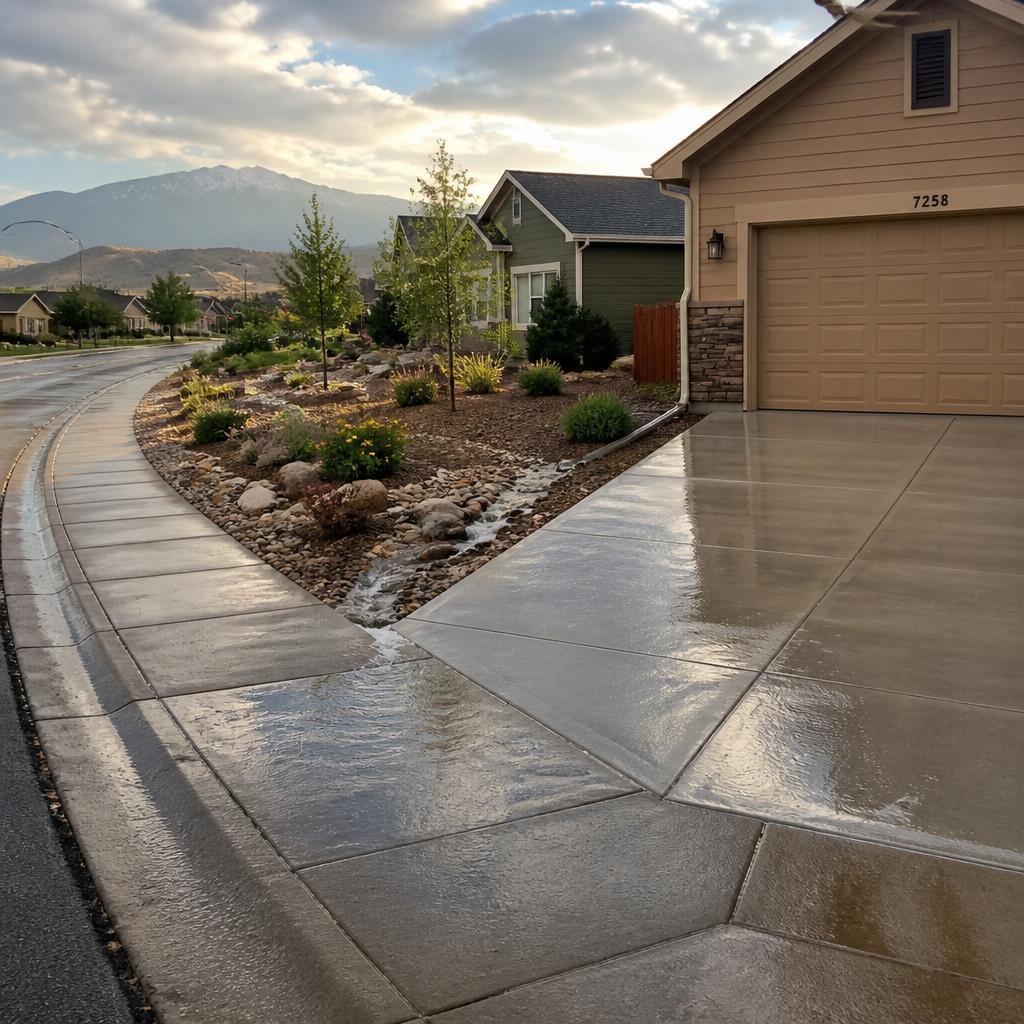
If a Colorado Springs slab is sinking, water is almost always part of the story. Expansive Pierre shale clay only misbehaves when its moisture level changes — and drainage decisions on the property control that moisture. Get drainage right and even marginal soil holds a slab for decades. Get it wrong and even a well-built driveway settles inside 10 years.
These are the seven drainage mistakes we see most often on Front Range properties, ranked roughly by how much damage they do.
By far the most common — and most destructive. A single downspout that ends within a foot or two of a driveway, sidewalk, or garage foundation delivers hundreds of gallons per storm directly into the sub-base under the concrete. Repeated for a decade, that's a guaranteed settlement path.
**Fix:** extend every downspout at least **6 feet** from any concrete or foundation, discharging onto a splash block or into a buried drain line that daylights well downslope. Our full write-up: downspouts and slab settlement.
Colorado Springs soil slowly slumps over time, and landscaping installed years ago often ends up pitching *toward* the house instead of away. When that happens, every rainstorm and every snowmelt cycle runs across the driveway, the patio, and the foundation slab before finding somewhere to go.
**Fix:** grade should drop at least **6 inches over the first 10 feet** away from any foundation or concrete edge. Walk the property with a level or long straightedge after any big landscaping change and reset the slope if it's gone flat.
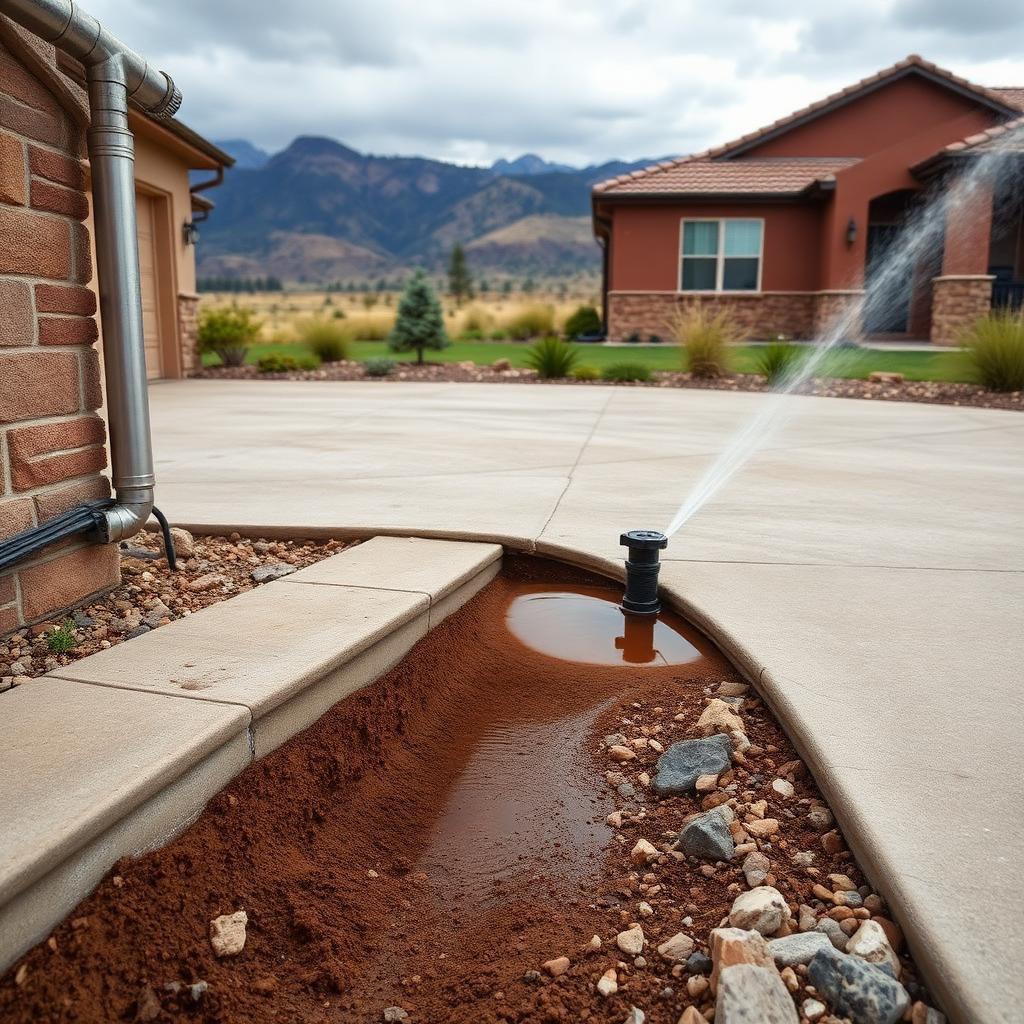
It's astonishing how many Colorado Springs sprinkler systems water the driveway and sidewalks as much as the lawn. Water that lands on the slab runs into every joint and crack and saturates the sub-base.
**Fix:** walk each zone during a manual test. Adjust or replace any head that hits concrete. Convert planters within a few feet of the slab to drip irrigation. It's a 30-minute job that adds years.
Deep organic mulch beds and edging that pond water directly against a driveway or patio behave like a sponge held to the slab. The moisture wicks under the edge, saturates the sub-base, and swells the clay. Our companion piece landscaping choices that protect (or damage) your concrete covers the plant and mulch side in more depth.
**Fix:** use free-draining rock mulch in the 12–18 inch strip nearest any slab, keep bed edges *below* the slab surface so water sheds away, and choose xeric plantings that don't need heavy irrigation right beside the concrete.
Every open joint and crack is a straw into the sub-base. When the polyurethane sealant in a control or expansion joint dries out and cracks — usually every 2–3 years along the Front Range — water goes straight down instead of running off. See what are expansion joints and why do they matter for how joints do their job.
**Fix:** reseal joints every 2–3 seasons with a self-leveling polyurethane sealant. Clean the joint with a wire brush and shop vac first — sealant only holds if the surface is dry and dust-free.
Homes in older Colorado Springs neighborhoods often have buried downspout lines that discharge somewhere in the yard. Over time, those lines crush, clog with roots, or their outlets get buried by landscaping. Now every storm quietly fills the pipe and backflows into the ground next to the house — usually right along a driveway or side patio.
**Fix:** trace every buried drain line to its outlet at least once. If you can't find where it comes out, or water backs up at the top when you flush a hose down it, the line is failed and needs to be repaired, cleaned, or re-routed.
Colorado Springs' July–August monsoon storms can drop an inch of rain in 20 minutes. That's more than most residential drainage designs are sized for, and it's when you find out where water *actually* wants to go across your property. Homeowners who only look at the yard on dry days miss the runoff channels that carve out sub-base every summer.
**Fix:** during (or right after) a monsoon storm, walk the property and note where sheet flow crosses the driveway, backs up against a patio, or runs along a sidewalk. Those are your priority fix points before next season. Our article on how poor drainage causes concrete settlement in Colorado Springs explains the mechanism in more depth.
Any one of these mistakes on its own is manageable. It's the *combination* — a downspout on the driveway, sprinklers hitting the slab, and negative grading — that reliably produces settlement. Fixing even two or three of them can slow ongoing movement enough to let a leveled slab hold indefinitely.
At least 6 feet, and 8–10 feet is better on expansive clay. Beyond that, the water has room to spread and infiltrate normally without saturating the sub-base under the concrete.
They can — when they intercept water *before* it reaches the sub-base. A properly designed French drain between the yard and the driveway edge is very effective. A retrofit French drain installed under a slab that has already settled is much less useful; the damage is already done.
No. Drainage fixes stop future movement; they don't lift a slab that has already sunk. The usual sequence is: fix the drainage first, then level the concrete once the sub-base has had a chance to stabilize.
Roughly 1/4 inch per foot of fall away from the house is a good target for driveways and patios. Enough to shed water quickly during a monsoon storm, gentle enough to be safe to walk on in winter.
You cannot change the clay under a Colorado Springs property, but you can absolutely change what water does when it lands on it. Fix these seven drainage mistakes and you take the fuel away from most residential concrete settlement.
If your slabs are already showing the results of past drainage problems, contact Colorado Springs Concrete Leveling for a free on-site walkthrough — we'll flag the drainage fixes worth doing before we lift anything. Call 719-521-2291 or request an estimate online.
Related reading: how poor drainage causes concrete settlement in Colorado Springs, downspouts and slab settlement, and 10 ways Colorado Springs homeowners can help prevent concrete settlement.
Think Your Concrete May Qualify for Lifting?
Free on-site inspection · Fixed written quote · No obligation
Related services
Get a local estimate
Keep reading
In Colorado Springs, the plants you put next to your driveway and patio matter as much as the concrete itself. Here's how to landscape so your slabs age well on Front Range clay.
Have questions about your concrete? Need advice? Want a free estimate? We're here to help. Concrete leveling saves the slab you already have, at a fraction of the cost of replacement.
Free Estimates · Colorado Springs-Focused Service · Clear Recommendations