In Colorado Springs, the plants you put next to your driveway and patio matter as much as the concrete itself. Here's how to landscape so your slabs age well on Front Range clay.
Landscaping and concrete share the same six inches of Colorado Springs soil — and that soil is almost always expansive Pierre shale clay. What you plant, where you plant it, and how you water it decides whether your driveway, sidewalk, or patio spends the next twenty years stable or slowly telegraphing every dry summer and wet spring.
Most homeowners don't think of landscaping as a concrete decision. Along the Front Range, it very much is.
Why Landscaping Matters More Here
Expansive clay in Colorado Springs swells when it takes on moisture and shrinks when it dries out. Plants pull moisture out of the soil unevenly. When one side of a slab is under a thirsty tree and the other side is under bare rock mulch, the two sides of the slab sit on soil that's expanding and contracting at very different rates. That's differential movement — and differential movement is exactly what cracks and tilts concrete.
The geology piece is covered in more depth in our article on how Colorado Springs expansive clay soil affects more than just concrete.
Trees: Distance Is Everything
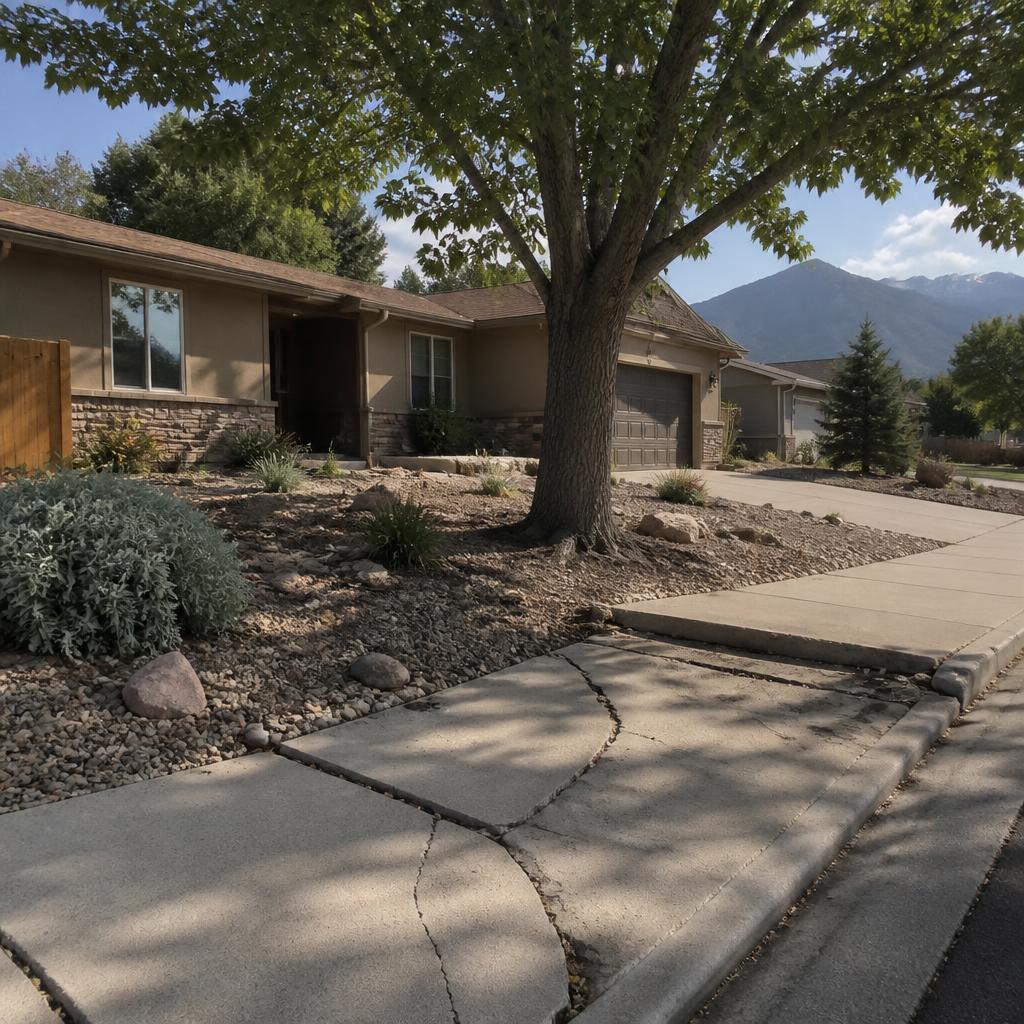
Trees do more damage to Colorado Springs concrete than any other landscape element, and it's rarely the roots. It's the moisture the roots extract from the clay beneath the slab.
General rules for the Front Range:
- Small ornamental trees (crabapple, serviceberry): 10 feet from any slab
- Medium trees (honeylocust, hackberry): 15–20 feet from any slab
- Large shade trees (cottonwood, sycamore, mature ash): 25–30 feet from any slab
- Willow and silver maple: don't plant near concrete at all
If you already have a mature tree close to a slab, our companion article on can tree roots cause concrete to sink in Colorado Springs covers how to think about the trade-offs before removing it.
Shrubs and Perennials: Keep a Buffer
Dense plantings right up against a slab tend to hold moisture on one side and dry out on the other as the seasons change. A 12–18 inch buffer of rock mulch or a shallow inert bed between the slab and the first row of shrubs evens the moisture profile out and dramatically reduces edge settlement.
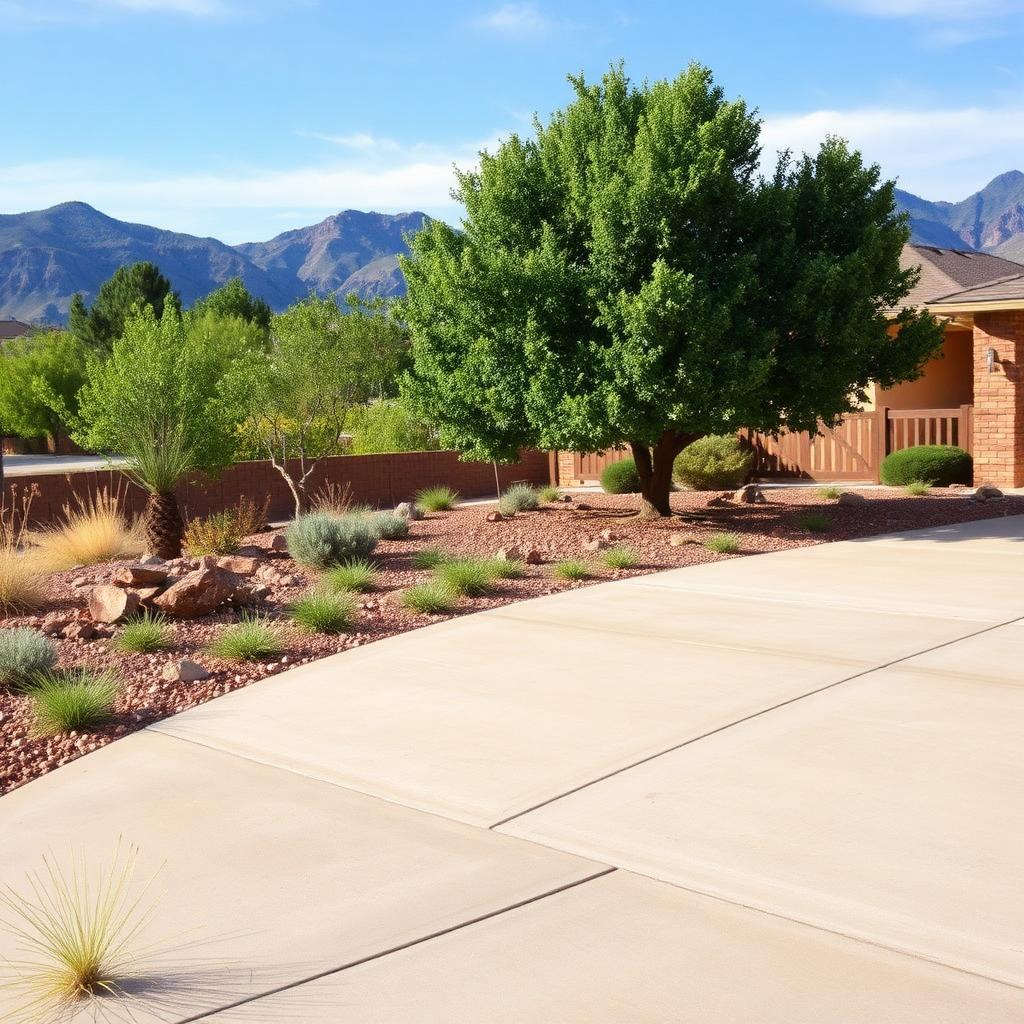
Native and xeric species (rabbitbrush, blue avena grass, penstemon, yarrow) pull far less moisture out of the soil than turf grass and are much friendlier to adjacent concrete.
Turf Grass Along Slab Edges
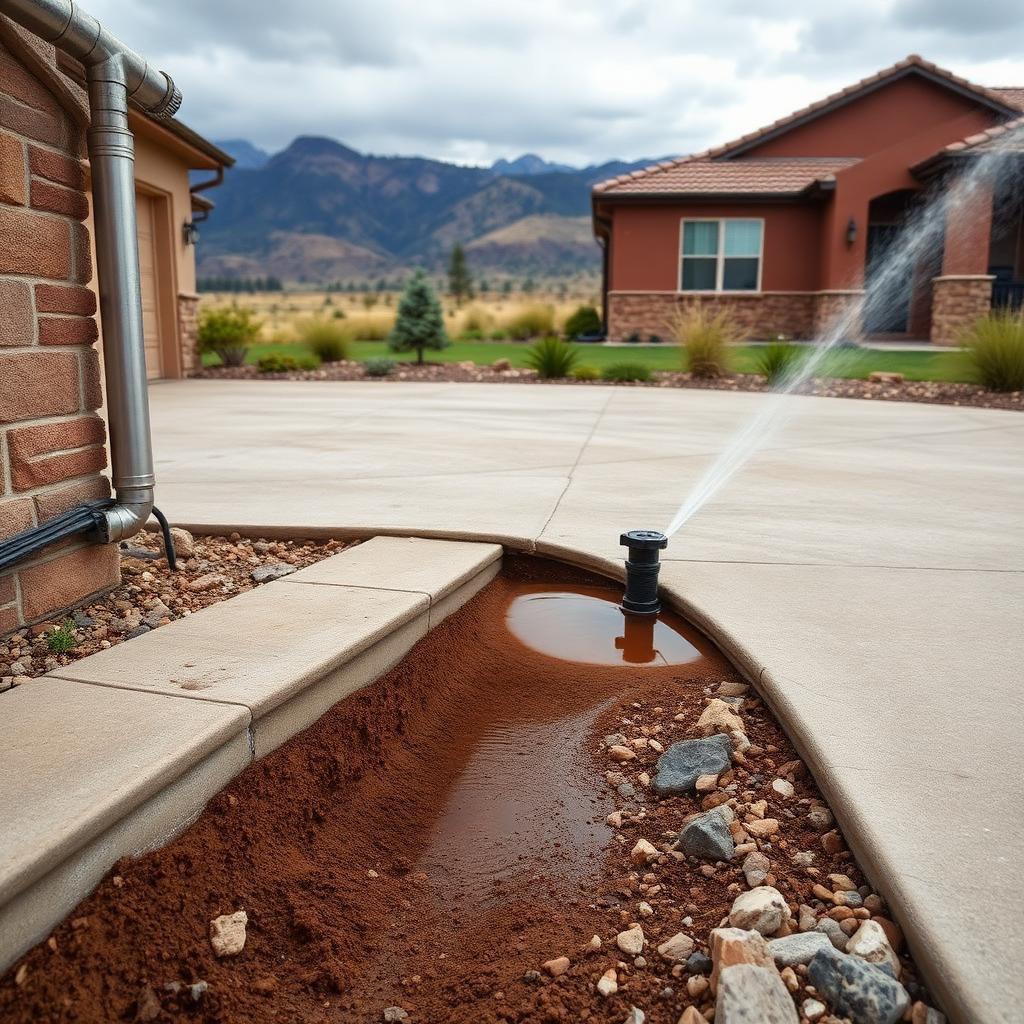
A traditional Kentucky bluegrass lawn right against a driveway is one of the more common Colorado Springs setups — and one of the more common ways to over-water the soil beneath a slab. Sprinkler heads set for the grass end up spraying the edge of the concrete, and the clay right at the joint stays wet all summer.
Two low-effort fixes:
- Convert the first 12–18 inches next to any slab from turf to rock or dryland groundcover
- Adjust or cap sprinkler heads that spray onto the slab edge
Mulch: Which Kind and How Deep
Mulch stabilizes soil moisture, which is exactly what expansive clay needs. Along slab edges in Colorado Springs:
- **Rock or gravel mulch (2–3 inches):** the safest choice next to concrete — drains freely, doesn't decompose, doesn't hold water against the slab
- **Bark or wood mulch (2–3 inches):** fine in landscape beds set back from the slab, but keep it off the concrete edge itself
- **Weed fabric under either:** stabilizes the soil profile and reduces evaporation swings
Avoid piling mulch directly against the slab or the house's foundation. Mulch against concrete traps moisture and can accelerate spalling on the slab edge.
Irrigation Layout Around Concrete
Drip irrigation is far kinder to concrete than spray irrigation. Drip lines deliver water where the plant actually uses it, not onto the slab or into the joint. When redesigning a bed next to a driveway or patio, converting spray to drip usually eliminates the chronic slab-edge saturation that leads to settlement.
If a full drip conversion isn't on the table, at least walk the yard during a live cycle and adjust every head that's throwing onto a slab edge. That single ten-minute walk saves a lot of concrete.
Slope, Swales, and Where the Water Goes
Landscaping is drainage design whether you meant it that way or not. When you're building or refreshing a bed:
- Grade the finished bed so it drains **away** from the slab and the foundation
- Leave a shallow swale between the slab and any raised planter so runoff has somewhere to go
- Don't dam runoff with landscape timbers or stone edging that traps water against the concrete
Our article on how poor drainage causes concrete settlement in Colorado Springs covers the drainage side of this in more detail.
Xeriscaping Is Concrete's Friend
It's not a coincidence that xeriscaped Colorado Springs yards see less concrete settlement than heavily irrigated ones. Xeric plantings drink less, moisture stays more stable across seasons, and the clay under the slabs moves less. If you're re-doing a front yard anyway, xeriscaping the strip next to the driveway is one of the highest-leverage concrete-protection moves available.
Frequently Asked Questions
Do I need to remove a mature tree next to my driveway?
Not automatically. Removing a mature Colorado Springs shade tree is a big decision with its own downsides — heat, curb appeal, wildlife. If the slab is stable and the tree is otherwise healthy, better first steps are converting the surrounding bed to xeric plantings, switching to drip irrigation, and getting downspouts and grading dialed in.
What's the safest tree to plant near concrete along the Front Range?
Small ornamentals like serviceberry, hawthorn, and crabapple planted at proper setback distances do the least damage. Large water-loving species like willow, silver maple, and cottonwood are the ones to avoid near slabs.
Is rock mulch really better than wood mulch next to concrete?
Directly against a slab, yes. Rock drains freely and doesn't decompose into water-holding organic matter. Wood mulch is fine in beds set a foot or two back from the concrete.
Will fixing landscaping alone stop existing settlement?
No. Landscaping choices prevent future movement and slow ongoing movement, but a slab that's already settled will stay settled until it's lifted. Address the landscaping and drainage first, then level the concrete.
Final Thoughts
In Colorado Springs, concrete and landscaping share the same clay soil — and the plants win every disagreement. Setting trees back, buffering slab edges with rock, converting spray to drip, and grading beds away from the house adds decades to the life of a driveway or patio for very little money.
If your existing concrete is already telling you the landscaping got away from it, contact Colorado Springs Concrete Leveling for a free on-site walkthrough. Call 719-521-2291 or request an estimate online.
Related reading: 10 ways Colorado Springs homeowners can help prevent concrete settlement, how Colorado Springs expansive clay soil affects more than just concrete, and how poor drainage causes concrete settlement in Colorado Springs.