Those grooves and gaps in your driveway aren't decorative — they're what keep Colorado Springs concrete from cracking itself apart as temperatures swing through 100+ freeze-thaw cycles a year.
If you've ever looked at your driveway and wondered why it's divided up into rectangles by grooves and wider gaps — that's not a design choice. Those lines are what keep the slab from cracking in random, ugly places as Colorado Springs concrete expands and contracts through the year.
Along the Front Range, where slabs live through 100+ freeze-thaw cycles, big daily temperature swings, intense high-altitude UV, and expansive clay soils underneath, those joints do a lot of quiet work. Understanding them makes it much easier to maintain a driveway or patio so it lasts.
Control Joints vs. Expansion Joints
Two different jobs, often confused.
Control Joints
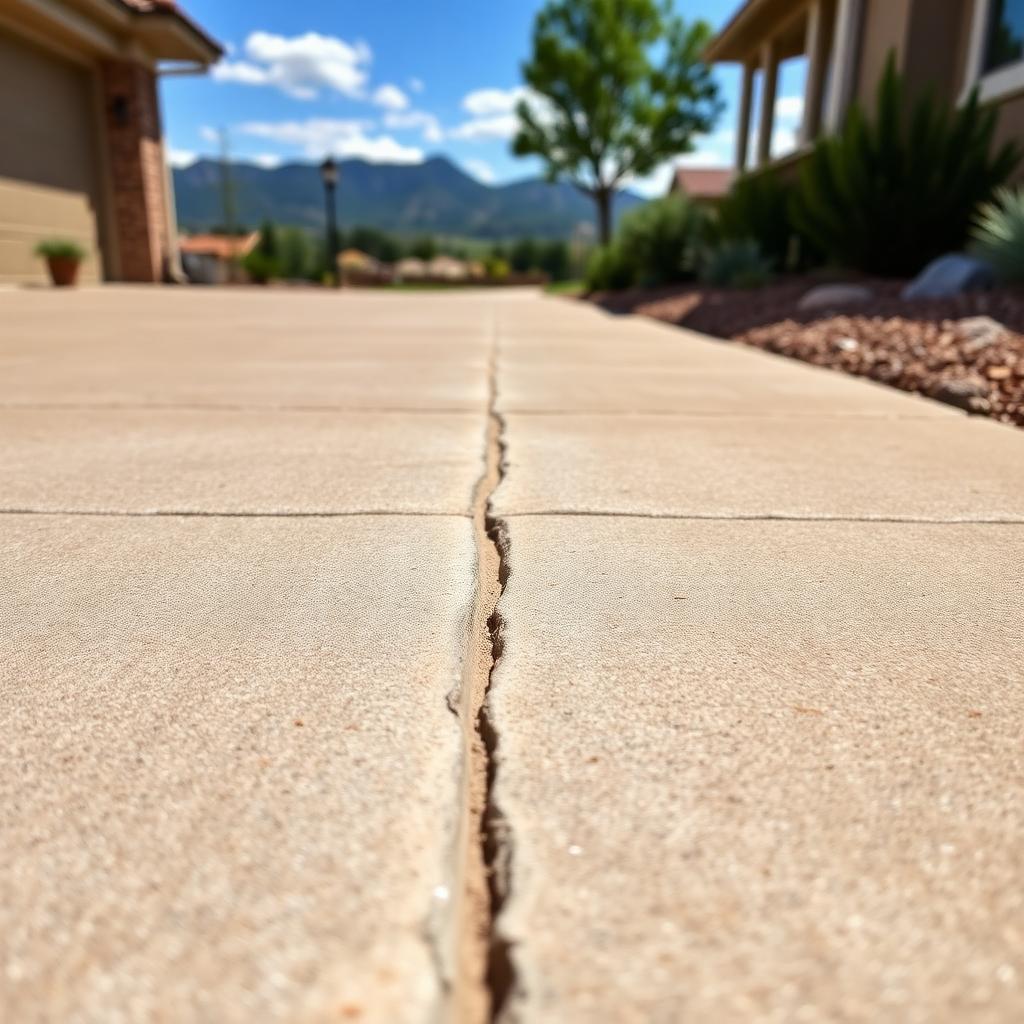
Control joints are the shallower grooves saw-cut or tooled into the slab shortly after the pour. They don't leave a gap — they create a **weak line** so that when the slab shrinks (which every concrete slab does as it cures) or moves seasonally, the crack forms *along the joint* instead of wandering across the middle of the slab.
Think of them as designated crack lines. Every concrete driveway has them. If yours doesn't, it will likely develop cracks in less predictable places.
Expansion Joints
Expansion joints are the wider, full-depth gaps — usually filled with a compressible material like foam board, fiber, or a flexible polyurethane sealant. Their job is to let two neighboring slabs (or a slab and a fixed structure like the house, a garage foundation, or a public sidewalk) move independently without slamming into each other.
You'll see them where a driveway meets the garage apron, where a patio meets the house foundation, and between long runs of sidewalk.
Why They Matter So Much in Colorado Springs
Two conditions here make joints more important than in milder markets:
- **Freeze-thaw cycles:** each cycle expands water inside the slab and any joint. Without room to move, adjacent slabs push against each other and spall at the edges.
- **Expansive clay:** Pierre shale under the slab swells with moisture and shrinks when it dries. That soil movement telegraphs up into the concrete; joints give the slab somewhere to absorb the movement.
Combined, they mean a Colorado Springs driveway without functional joints will crack — the only question is where. See how Colorado Springs winters affect concrete for the freeze-thaw mechanism and how Colorado Springs expansive clay soil affects more than just concrete for the soil side.
What Happens When Joints Fail
Failed joints are one of the most common paths to premature concrete damage. Signs to watch for:
- The joint sealant has cracked, dried out, or fallen out entirely
- Water visibly runs into the joint instead of over it
- The joint edges are chipped or spalled
- Weeds are growing out of the joint
- One side of the joint has settled below the other
Any of those means water is now free to travel into the sub-base under the slab. On Colorado Springs' expansive clay, that's the beginning of settlement.
Maintaining Joints (What Actually Works)
Joint maintenance is one of the cheapest, highest-impact things a homeowner can do.
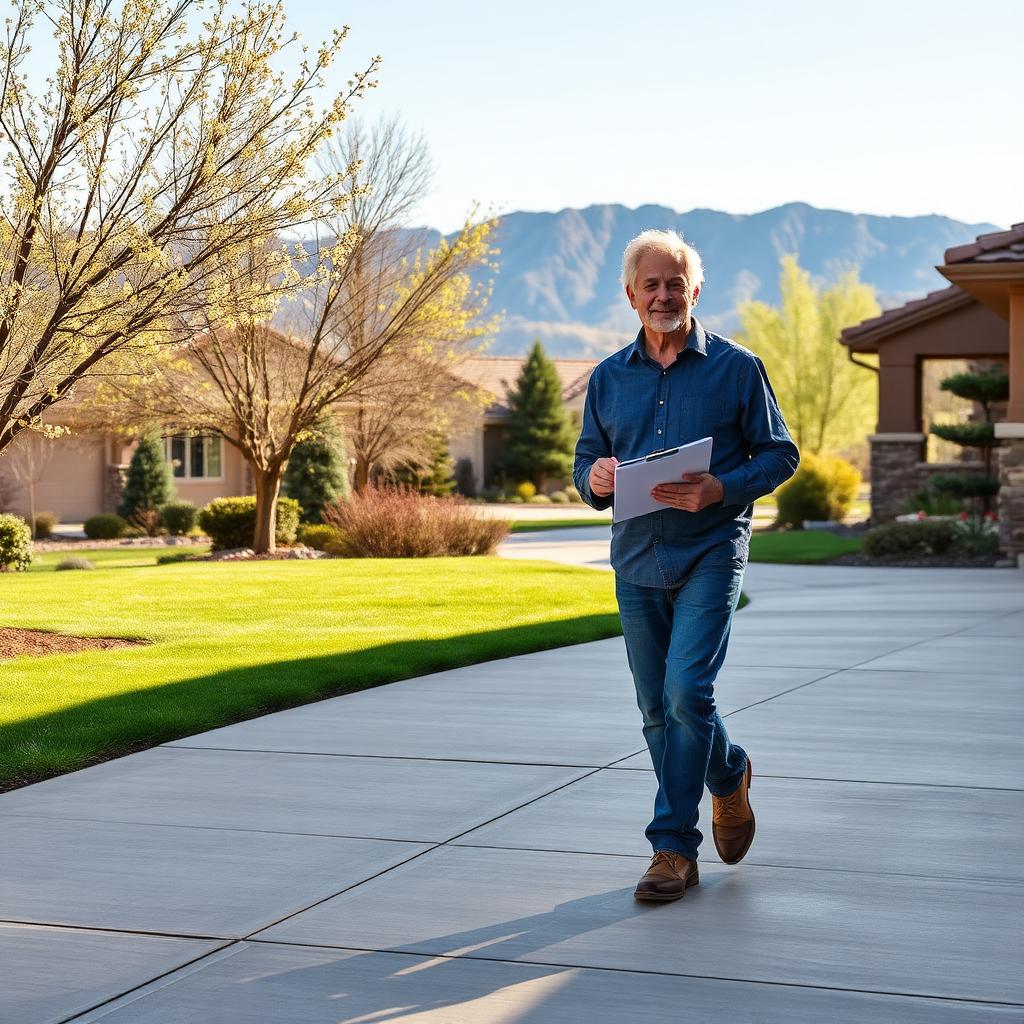
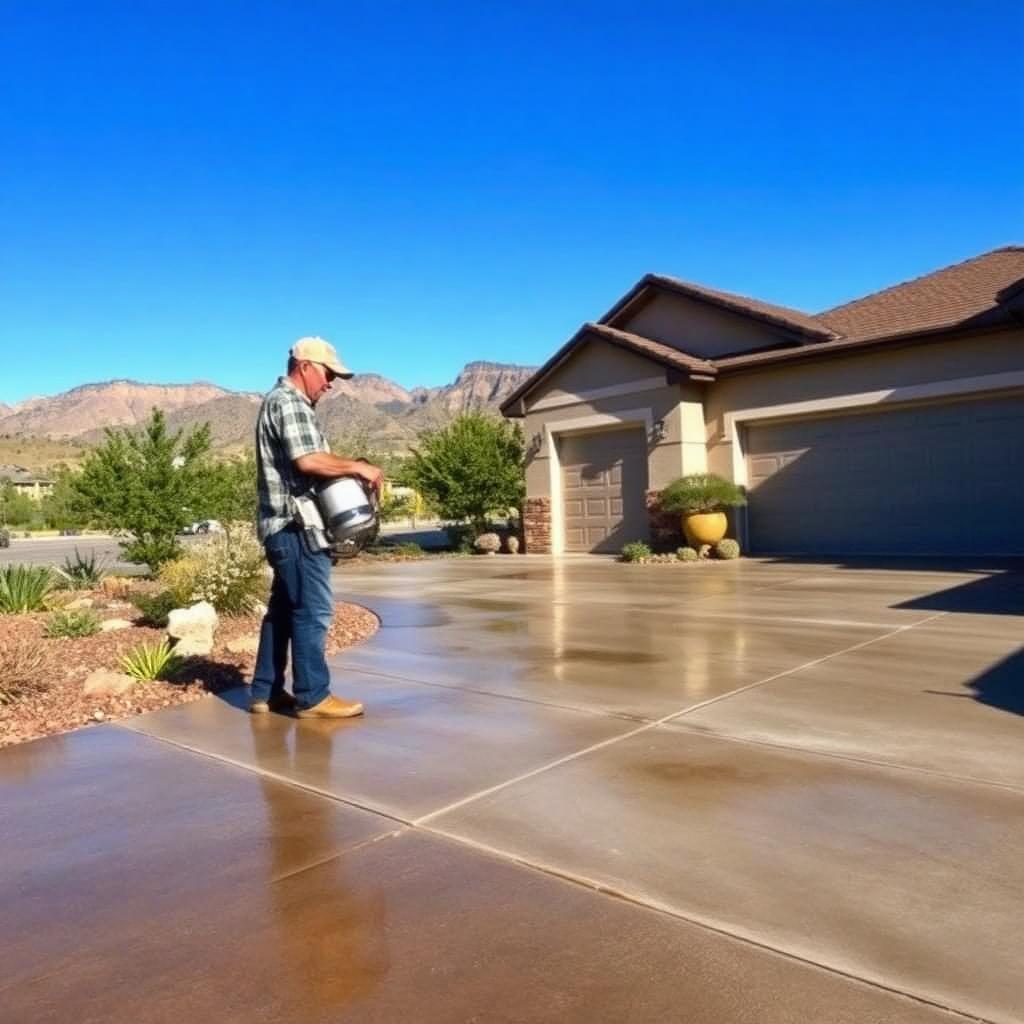
- **Every 2–3 years:** inspect all joints and resealing any that have cracked or pulled away
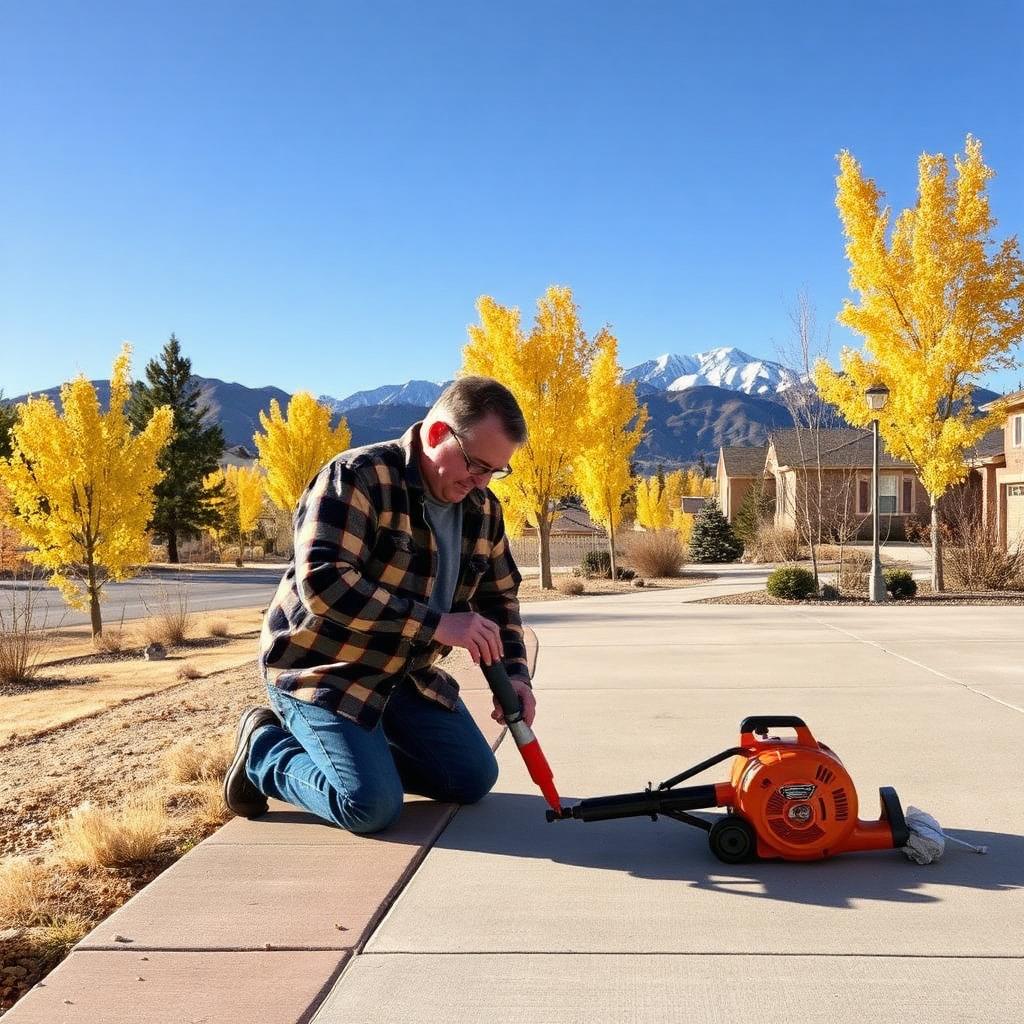
- **Use a self-leveling polyurethane sealant** — it stays flexible through freeze-thaw and bonds to concrete better than silicone
- **Clean the joint first:** a wire brush, a shop vacuum, and a dry joint make a huge difference in how long the seal lasts
- **Backer rod for wide joints:** foam backer rod at the bottom keeps the sealant at the right depth and prevents three-sided bonding failures
- **Skip hard fillers:** mortar or rigid caulk in an expansion joint defeats the purpose — the joint needs to compress
New Slabs: Making Sure Joints Are Placed Correctly
If you're pouring new concrete on a Colorado Springs property, ask your contractor about:
- **Control joint spacing** — typically 2 to 3 times the slab thickness in feet (so 8–12 feet apart for a 4-inch driveway)
- **Depth** — control joints cut roughly 1/4 of the slab depth
- **Timing** — cut within 6–18 hours of the pour, not days later
- **Expansion joint locations** — at every fixed edge (house, garage apron, sidewalk transition, columns)
Contractors who cut joints late or space them too far apart save time on pour day and hand you random cracks a year later.
Joints and Concrete Leveling
When a slab is lifted with polyurethane foam, existing control and expansion joints stay intact. In fact, they're often what makes the lift possible — the joints let the panel move as a unit while the surrounding concrete stays put.
After a lift, we usually recommend resealing the joints on the lifted panels to close up any water paths that opened during settlement. It's a small addition that protects the repair. See how long does concrete leveling last for how joint condition ties into overall lift durability.
Frequently Asked Questions
Are control joints and expansion joints the same thing?
No. Control joints are shallow saw-cuts that guide where the slab will crack. Expansion joints are wider, full-depth gaps filled with compressible material that let neighboring slabs move independently.
How often should I reseal concrete joints in Colorado Springs?
Every 2–3 years is a reasonable rhythm along the Front Range. Sun, freeze-thaw, and monsoon-season moisture all break sealants down faster here than in milder markets.
Can I use silicone caulk to seal my joints?
It's not ideal. Silicone doesn't bond to concrete as reliably as polyurethane and often peels away within a season. A self-leveling polyurethane joint sealant is the standard here.
What if my driveway doesn't have expansion joints?
Some older Colorado Springs driveways were poured without proper expansion joints. If you're seeing edge spalling where the slab meets the garage or a public sidewalk, cutting in a proper expansion joint (and sealing it) is worth discussing with a contractor before the damage spreads.
Final Thoughts
Joints aren't glamorous, but they're the difference between a Colorado Springs driveway that ages gracefully and one that starts cracking in random spots inside a decade. Reseal them every couple of years, keep water out of the sub-base, and the concrete on top does its job for a long time.
If your joints are already failing and settlement has started, contact Colorado Springs Concrete Leveling for a free on-site walkthrough. Call 719-521-2291 or request an estimate online.
Related reading: how Colorado Springs winters affect concrete, 10 ways Colorado Springs homeowners can help prevent concrete settlement, and spring concrete inspection checklist for Colorado Springs homeowners.