Concrete leveling fixes settlement after it happens — but a handful of small habits along the Front Range can keep slabs from moving in the first place. Here are the ten that matter most in Colorado Springs.
Most Colorado Springs concrete settlement traces back to one thing: **water in the wrong place**. Between our expansive Pierre shale clay, 100+ freeze-thaw cycles a year, heavy spring snowmelt from the foothills, and monsoon downpours, slabs here get more soil movement under them than in almost any other market in the country.
The good news is that a handful of small habits will keep most driveways, sidewalks, patios, and pool decks stable for years longer than they otherwise would. None of this is expensive. All of it is easier to do than to reverse.
1. Extend Every Downspout at Least 6 Feet From the House
This is the single highest-leverage move on the list. In Colorado Springs, a downspout that dumps rain and snowmelt right at the foundation is quietly saturating the soil under the driveway, walkway, or patio at the same time. Cheap plastic extensions or buried drain lines that daylight out into the yard both work — just get the water *away* from any adjacent slab.
2. Keep Positive Grading Around the House
The ground should slope away from the foundation for the first six to ten feet. That's the number the ICC recommends, and it's the number Colorado Springs inspectors reference. Reverse grade sends water straight under adjacent flatwork — and expansive clay reacts to that water. Regrading a small trouble spot with a wheelbarrow of soil is a Saturday project. Ignoring it is a slab-leveling bill.
3. Move Sprinkler Heads Away From Slab Edges
Walk the yard during a scheduled irrigation cycle. Any sprinkler head that's throwing water directly onto a driveway edge, sidewalk, patio, or foundation is a slow leak into the soil beneath it. Adjust the arc, cap the head, or relocate it. In Briargate, Wolf Ranch, Cordera, and other newer subdivisions where irrigation systems are dense, this fix alone often ends chronic slab-edge saturation.
4. Watch Your Landscaping Choices Near Concrete
Thirsty trees, heavy shrubs, and dense turf right against a slab all pull moisture unevenly out of the soil and can cause differential shrinkage — one side dries and settles while the other stays wet and swells. Our guide on landscaping choices that protect (or damage) your concrete covers what to plant where along the Front Range.
5. Seal Cracks and Joints Every Couple of Years
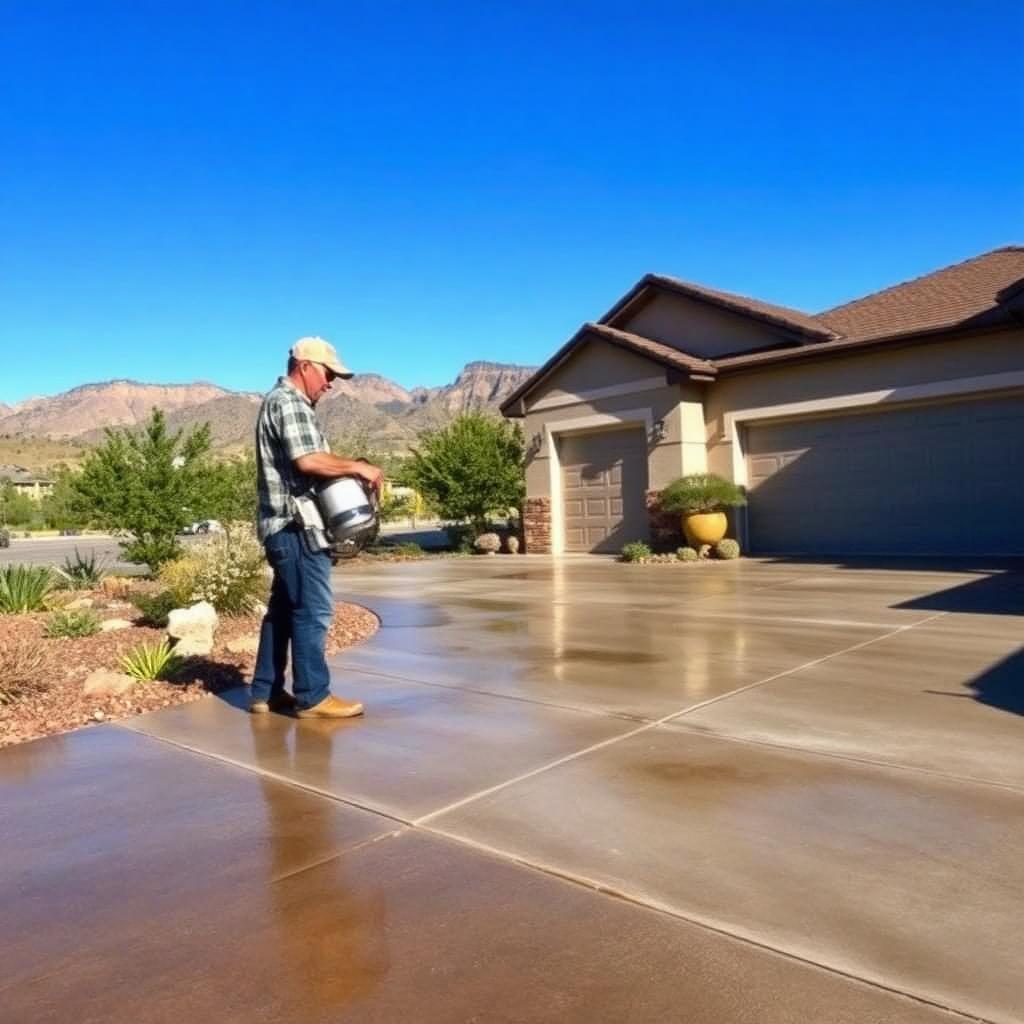
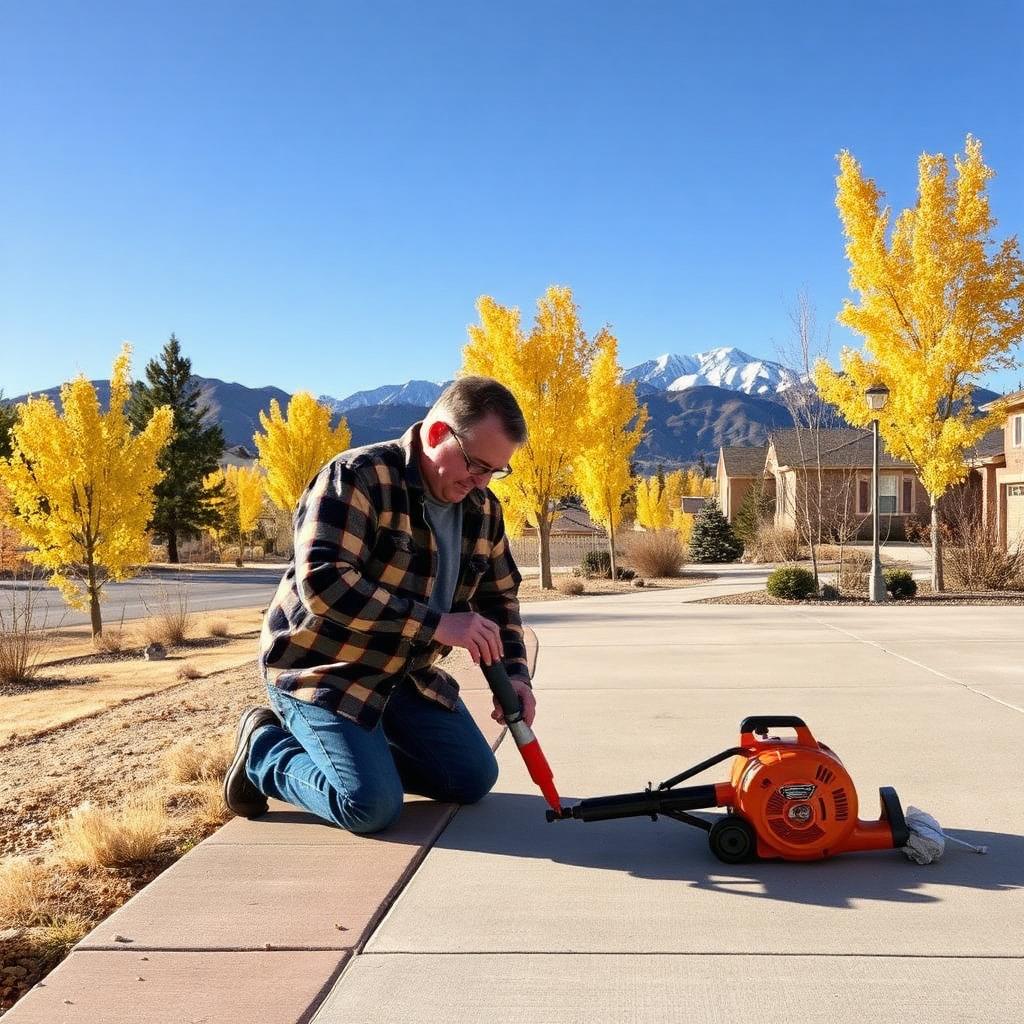
Colorado Springs sees enough freeze-thaw cycles that any crack or joint left unsealed becomes a funnel for water into the soil below. A tube of self-leveling polyurethane joint sealant costs almost nothing and shuts down the most common water path into the sub-base. Focus on control joints, expansion joints, and any hairline cracks wider than a credit card.
6. Clean Gutters at Least Twice a Year
Clogged gutters overflow at the corners — and those corners are almost always right above a driveway apron, front walkway, or patio. Colorado Springs' pine needles and cottonwood catkins do this every spring. A late-spring and late-fall cleaning is enough for most homes.
7. Direct AC Condensate and Sump Discharge Away From Slabs
Air-conditioner condensate lines and sump-pump discharges often dump a steady trickle in the same spot for months. On expansive clay, that steady trickle is enough to move a slab. Extend both discharges out into the yard, away from any hardscape.
8. Shovel Snow Off Slabs — But Skip the Rock Salt
Clearing snow keeps meltwater from repeatedly refreezing on the slab. Rock salt, though, chemically attacks the surface and accelerates spalling that eventually lets water into the sub-base. Use magnesium or calcium chloride sparingly, or just sand for traction. Our article on how Colorado Springs winters affect concrete explains the freeze-thaw side in detail.
9. Do a Two-Minute Walk-Through Every Spring
Once the snow is off, walk every slab on the property. Look for new hairline cracks, low spots that collected snowmelt, sections that have started to tilt, and joints that opened up over winter. Catching a 1/4" of settlement in April is dramatically cheaper to correct than catching 1" of settlement in October. Our spring concrete inspection checklist walks the whole routine step by step.
10. Address Small Settlement Early
A slab that's dropped 1/4" is almost always still level-able with polyurethane foam. A slab that's dropped 2" and cracked in the middle usually isn't. In Colorado Springs' climate, the gap between those two stages can be a single wet spring. Our companion article on how small concrete problems can become expensive repairs covers the economics of catching it early.
A Realistic Yearly Rhythm
- **Spring** — walk the slabs, clean gutters, check downspout extensions, look for winter cracks
- **Summer** — check sprinkler arcs during a live cycle, reseal any open joints, trim landscaping back from slab edges
- **Fall** — clean gutters again, verify grading before the ground freezes, extend downspouts before first snow
- **Winter** — shovel snow off slabs, skip the rock salt, keep an eye on ice buildup at downspout outlets
That's less than an hour of work per season for most homes — and it's the difference between a driveway that lasts 25 years and one that needs leveling at 10.
Frequently Asked Questions
Which prevention step matters most in Colorado Springs?
Getting downspouts and sprinklers away from slab edges. Nothing else on this list comes close in terms of impact per hour of effort, because water in the sub-base is the root cause of the vast majority of slab settlement here.
Do I really need to seal cracks and joints?
Along the Front Range, yes. Unsealed joints and hairline cracks are the fastest path for meltwater and monsoon rain into the soil beneath a slab. Fresh sealant every couple of years is one of the cheapest preventive steps a homeowner can take.
Will these steps stop expansive clay from moving?
No — nothing does that on a residential budget. What they do is keep the clay under your slabs at a *consistent* moisture level, so it doesn't swell and shrink dramatically between seasons. Consistent moisture is the goal, not dry soil.
What if I've already got settlement?
Fix the drainage and grading first, then level the slab. Leveling without addressing the water source usually just resets the clock on the same problem. A quality concrete leveling estimate will diagnose both.
Final Thoughts
Preventing settlement in Colorado Springs isn't complicated — it's mostly water management on expansive clay. Downspouts, grading, sprinklers, sealed joints, and a two-minute walk each spring do most of the work.
If you're already seeing signs of settlement, contact Colorado Springs Concrete Leveling for a free on-site walkthrough. Call 719-521-2291 or request an estimate online.
Related reading: how Colorado Springs winters affect concrete, spring concrete inspection checklist for Colorado Springs homeowners, and how poor drainage causes concrete settlement in Colorado Springs.