Where roof runoff ends up matters. Learn how downspouts, gutters, and grading can quietly drive concrete settlement along the Front Range — and the practical drainage adjustments that help protect your slabs.
Concrete settlement rarely has one cause. But if you evaluate enough sunken slabs in the Colorado Springs area, one pattern shows up over and over again: water was ending up in the wrong place.
Downspouts that discharge directly onto or beside a slab, negative grading against the concrete, and short splash blocks are all common contributors. This article walks through why drainage matters so much along the Front Range and the low-cost adjustments that can help.
Why Drainage Matters More Along the Front Range
Colorado Springs weather concentrates precipitation. Warm-season thunderstorms can deliver a large volume of water in a short time, and winter snowmelt refreezes and thaws repeatedly. When that water is directed against or under concrete, it can wash out and rearrange the soil beneath the slab.
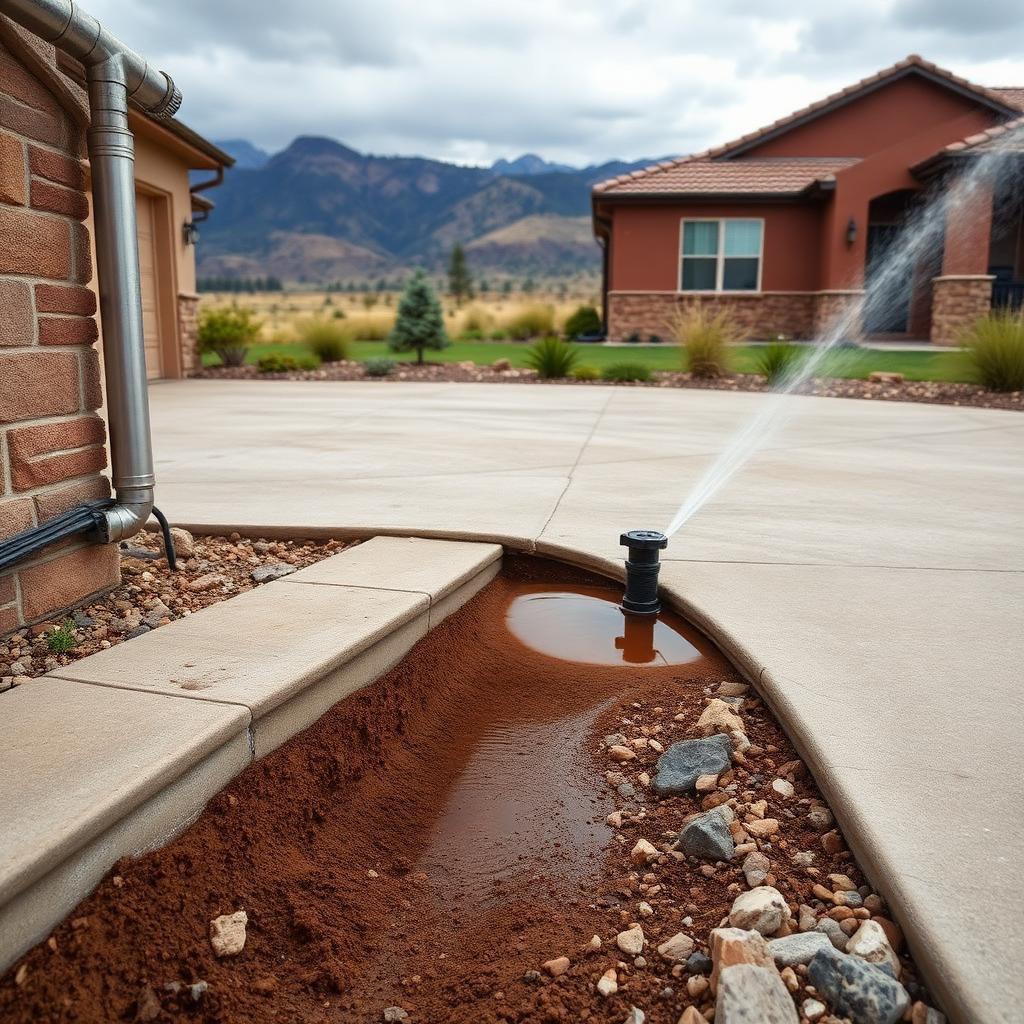
The affected soil then loses volume or shifts. The slab loses support in that spot and begins to drop or tilt. In many cases, the crack or offset appears months or years after the drainage issue started.
Common Downspout Problems
- Downspouts that end within a few inches of the slab edge
- Short splash blocks that only move water a foot or two away
- Downspout extensions that discharge into low landscaping beds that then drain back toward the concrete
- Clogged gutters that overflow directly against a walkway or driveway edge
- Extensions that are disconnected in winter and never reconnected
Grading and Landscaping Contributors
- Landscape beds that have been built up above the slab edge, trapping water against it
- Irrigation heads that spray directly onto concrete
- Settled soil at the slab edge that has formed a small channel toward the house
- Mulched areas that hold moisture right next to a driveway or patio
Practical Adjustments That Help
Most drainage improvements around concrete are inexpensive relative to the potential cost of a repeat repair. Common adjustments include:
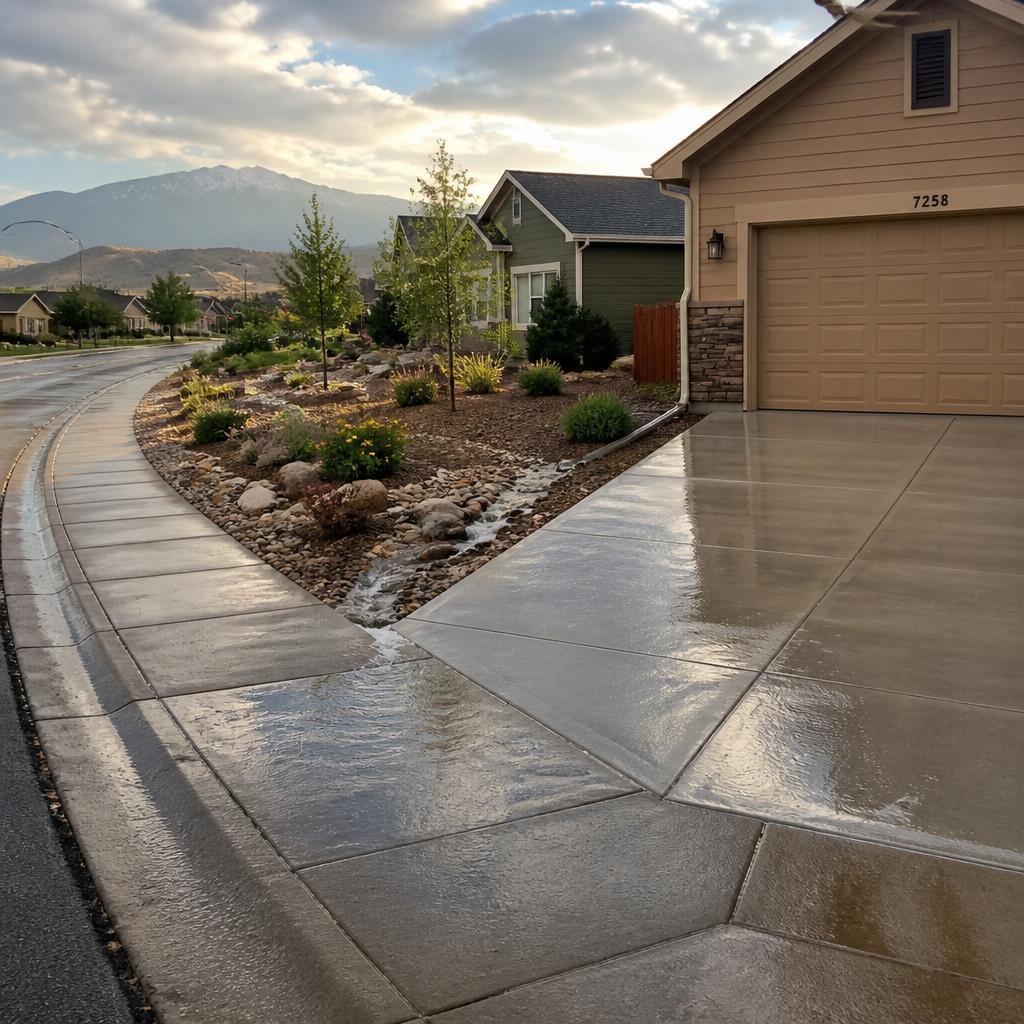
- Extending downspouts several feet past the slab, discharging onto a stable surface that slopes away
- Replacing short splash blocks with longer extensions or rigid pipe
- Regrading landscape beds so soil slopes gently away from the concrete
- Adjusting irrigation heads and schedules to keep water off the slab
- Cleaning gutters seasonally so overflows do not concentrate along one edge
When Drainage Fixes Are Not Enough
If a slab has already dropped, drainage improvements alone will not raise it. In that case, an on-site evaluation can help determine whether the concrete is a candidate for leveling, whether replacement makes more sense, and what drainage adjustments should accompany the repair to help protect it.
Related reading: How Poor Drainage Causes Concrete Settlement in Colorado Springs, 7 Common Drainage Mistakes That Lead to Concrete Settlement, and Water Pooling on Driveway.
Get a Colorado Springs Evaluation
If you are seeing signs of settlement near a downspout, a low landscape bed, or an irrigation zone, an on-site evaluation is the fastest way to understand what is happening. Call 719-521-2291 or request a free estimate.