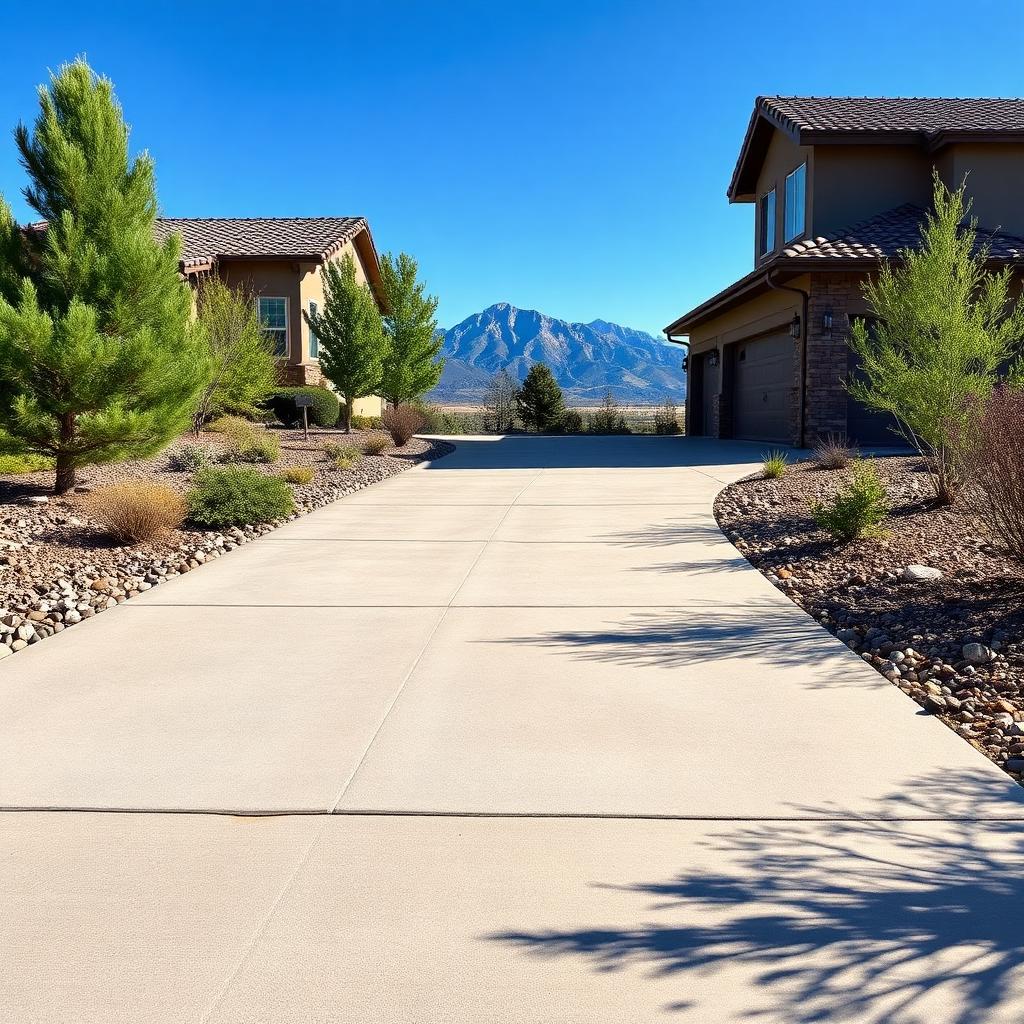
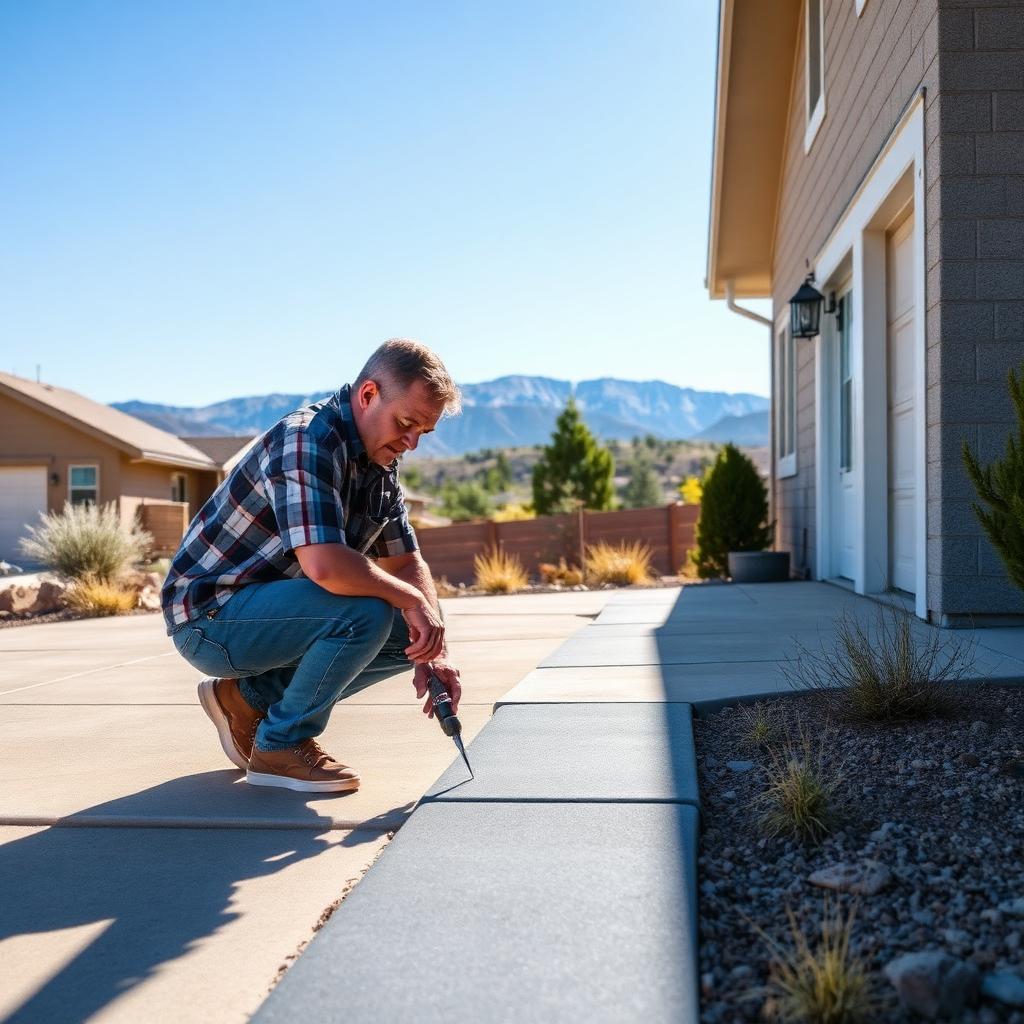
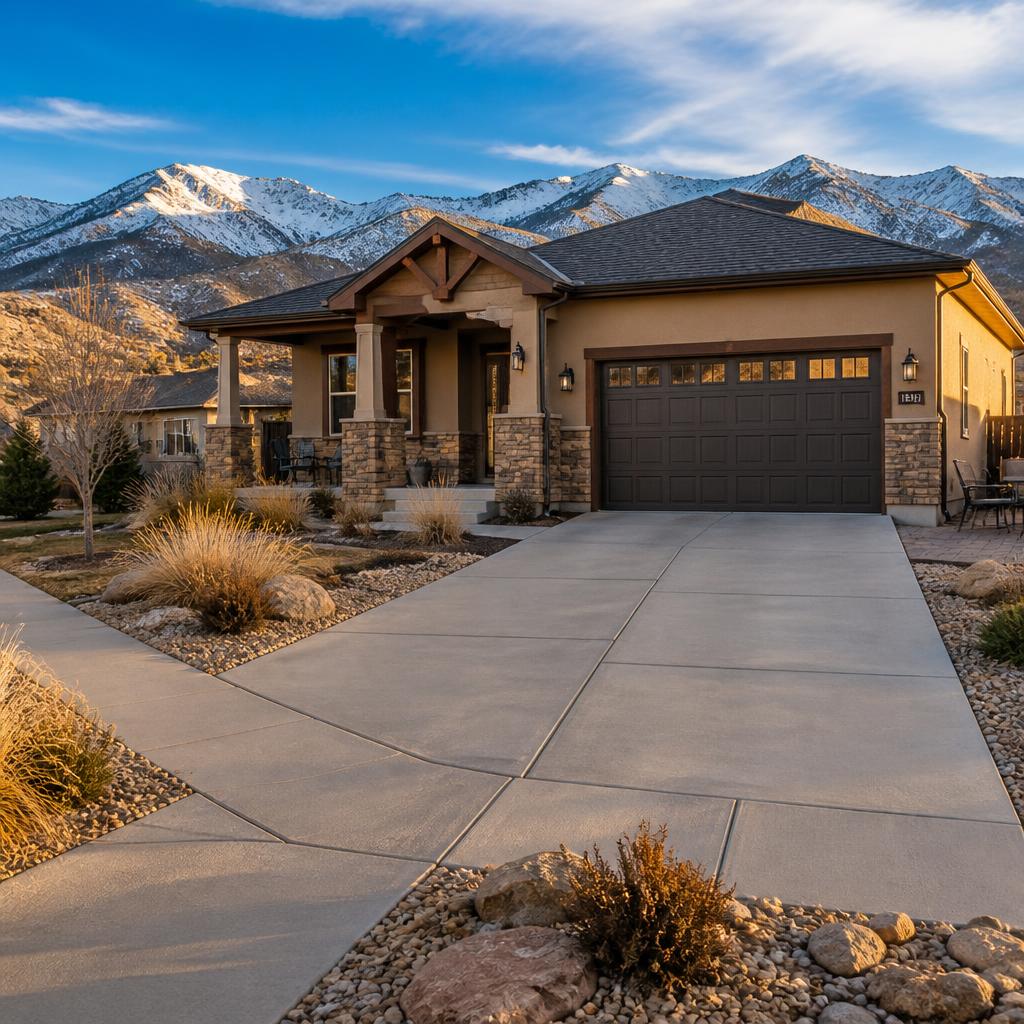
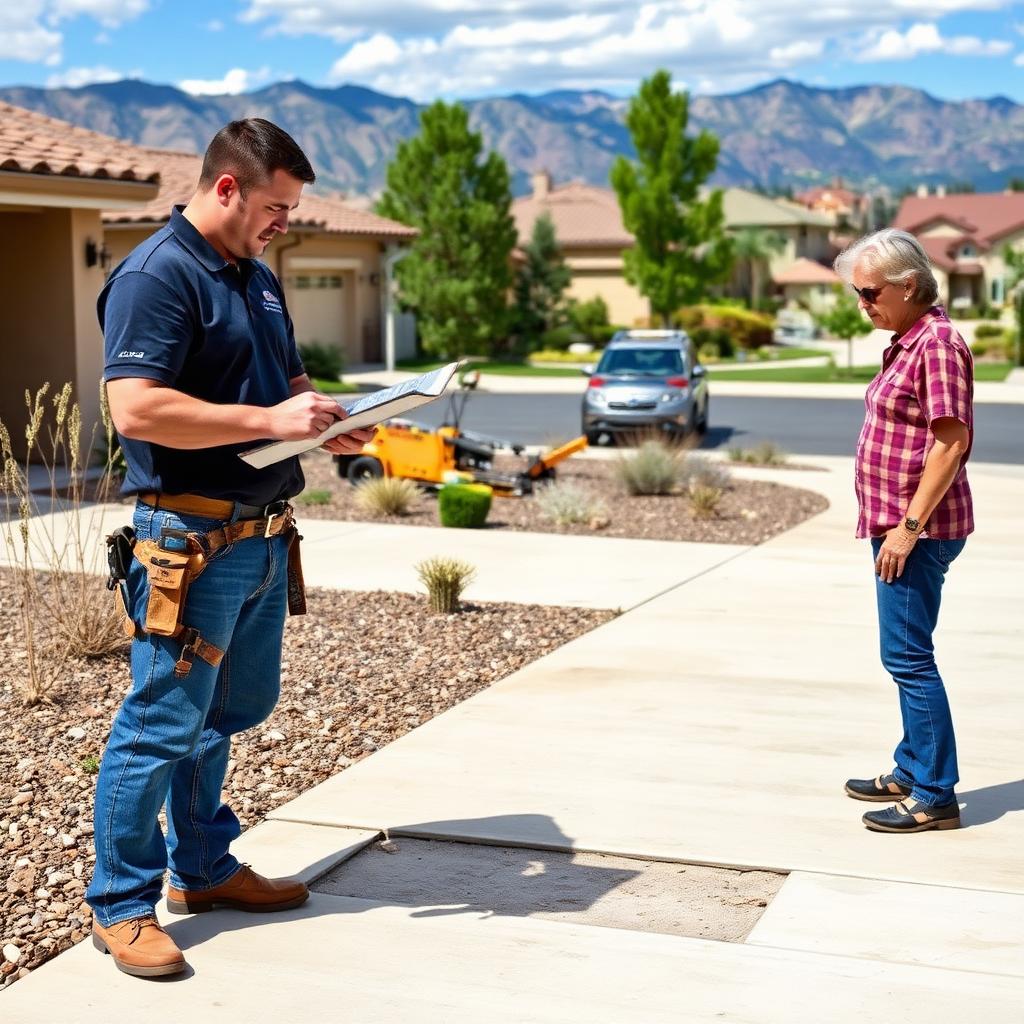
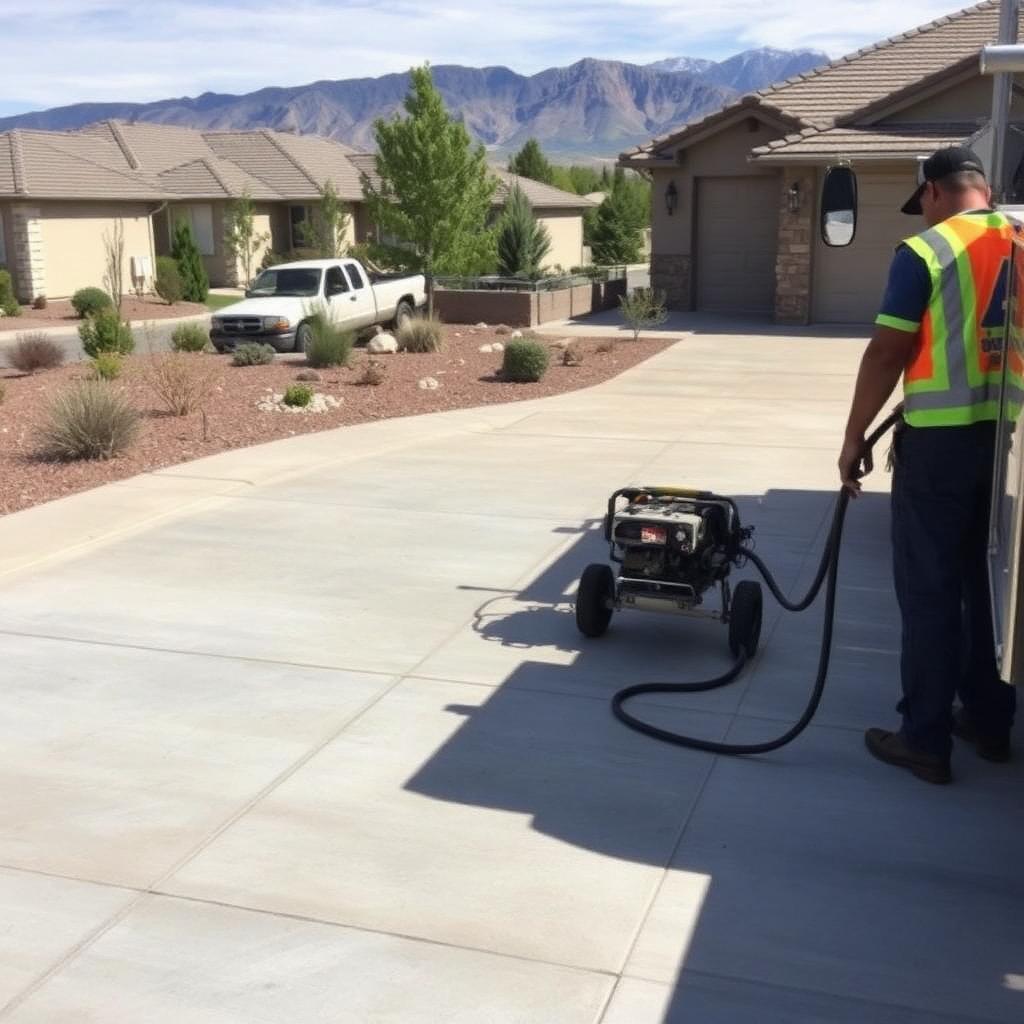
A properly built concrete driveway in Colorado Springs can last 25–40 years — but the Front Range climate and expansive clay soils shorten that number quickly when maintenance slips. Here's a realistic range and what changes it.
The short answer: a well-built, well-drained residential concrete driveway in Colorado Springs should last **25 to 40 years**. Some make it past 50. Others show serious problems inside 15.
The variance is huge because a driveway's life along the Front Range depends less on the concrete itself and more on what's happening under it and around it — expansive Pierre shale clay, 100+ freeze-thaw cycles a year, monsoon downpours, and whether the drainage was ever set up correctly. Getting a realistic expectation matters, because it shapes whether you should be leveling, resurfacing, or replacing when problems appear.
Typical Lifespan Ranges in Colorado Springs
- **Well-built, well-drained, maintained:** 30–40+ years
- **Typical Colorado Springs driveway with normal maintenance:** 25–30 years
- **Poor drainage or thin sub-base:** 15–20 years before major issues
- **Built directly on unimproved expansive clay:** 10–15 years before visible settlement
Older neighborhoods like the Old North End and parts of Manitou often have original driveways well past 40 years old that are still serviceable. Some newer subdivisions built quickly on marginal fill see settlement in under a decade. The concrete recipe hasn't changed much; the ground under it has.
What Actually Shortens a Driveway's Life Here
1. Freeze-Thaw Cycles
Colorado Springs sees more than 100 freeze-thaw cycles per year — one of the highest counts in the country. Each cycle expands any water sitting in a joint, crack, or pore, then contracts. Over years, that's what causes surface spalling and joint deterioration. Our article on how Colorado Springs winters affect concrete covers the mechanism in detail.
2. Expansive Clay Beneath the Slab
Pierre shale clay expands and contracts with moisture. A slab on unstabilized clay flexes with the soil until it cracks and settles. See how Colorado Springs expansive clay soil affects more than just concrete.
3. Drainage
Water in the sub-base is the single biggest driver of premature failure. Downspouts, sprinklers, and grading that direct water toward the driveway cut lifespan roughly in half. See how poor drainage causes concrete settlement in Colorado Springs.
4. De-Icers and Rock Salt
Rock salt chemically attacks concrete and accelerates surface spalling. Magnesium or calcium chloride is gentler; sand for traction is gentler still.
5. Vehicle Loads
Residential driveways are typically poured 4 inches thick for passenger vehicles. Regular use by heavier trucks, RVs, or delivery vehicles that weren't planned for shortens life considerably.
6. Original Build Quality
Sub-base preparation, rebar or mesh reinforcement, thickness, joint spacing, and cure conditions on pour day all set the ceiling on how long the slab can last. There's no fix for a poor pour except replacement.
How to Stretch Your Driveway's Life
None of these are expensive; all of them add years.
- Extend every downspout at least 6 feet from the driveway
- Keep sprinkler heads from spraying the slab edges
- Reseal control joints and any hairline cracks every 2–3 years
- Shovel snow instead of letting it repeatedly refreeze
- Skip rock salt — use sand or magnesium chloride when needed
- Walk the slab every spring and address small settlement early
Our companion guide on 10 ways Colorado Springs homeowners can help prevent concrete settlement walks the full routine.
When to Level, Resurface, or Replace
- **Level:** structurally sound slab with settlement of up to 2–3 inches and no widespread cracking. Best option for most Colorado Springs driveways showing their age.
- **Resurface:** cosmetic surface wear or minor spalling on an otherwise sound and level slab.
- **Replace:** widespread cracking, crumbling edges, multiple failed sections, or a slab that has already been lifted once and is now failing structurally.
For most driveways in the 15–30 year window, leveling is a dramatically cheaper way to reset the clock than replacement. Our comparison of concrete leveling vs. replacement walks through where the line falls.
Frequently Asked Questions
Does high elevation in Colorado Springs shorten driveway life?
Elevation itself doesn't hurt concrete, but the *effects* of elevation do: more intense UV, wider daily temperature swings, and more freeze-thaw cycles all shorten surface life relative to lower-elevation markets. Our article on does Colorado Springs high elevation affect concrete covers this in depth.
How can I tell whether my driveway is at end-of-life?
Multiple failed sections, widespread cracking with vertical offset, crumbling edges, and drainage that's actively saturating the sub-base are all late-stage signs. A single settled section on an otherwise sound driveway is almost always a leveling candidate, not a replacement one.
Do sealers really extend driveway life?
Yes — modestly. A quality penetrating sealer every 3–5 years reduces the water absorption that drives freeze-thaw damage. It's a small investment relative to the years it adds.
Is a leveled driveway as good as a new one?
Structurally, a foam-lifted slab performs like the slab it was before it settled — better in some ways, because the sub-base under it is now stabilized. It won't look brand new, but it's a genuine repair, not a stopgap.
Final Thoughts
A Colorado Springs concrete driveway that gets basic drainage and maintenance attention should serve you for 30 years or more. The ones that don't often show serious settlement in half that time — and the difference isn't the concrete, it's the water and the clay underneath.
If your driveway is showing its age and you're wondering whether to lift it or replace it, contact Colorado Springs Concrete Leveling for a free on-site evaluation. Call 719-521-2291 or request an estimate online.
Related reading: concrete leveling vs. replacement, how long does concrete leveling last, and how Colorado Springs winters affect concrete.